Author

admin

Browsing

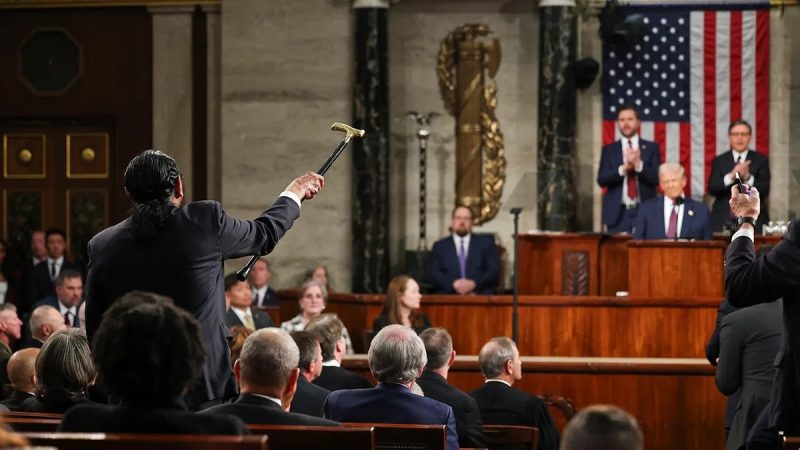
Rep. Al Green, D-Texas, is ready to sit in for President Donald Trump’s State of the Union speech after being ejected from Trump’s primetime address in 2025.

Fox News Digital spotted Green on the Democrats’ traditional side of the House chamber Tuesday evening, standing at a seat just five rows from where Trump will be speaking starting at 9 p.m. Eastern Standard Time.

The longtime Texas progressive lawmaker was removed by security in 2025 during Trump’s address to a joint session of Congress after repeatedly interrupting the president by shouting and shaking his cane.

The House voted to censure Green over the outburst, with 10 Democrats joining the GOP in the move.

He was one of several Democrats to disrupt Trump’s speech in 2025, but Green’s persistent and loud protests after being asked to quiet down forced Speaker Mike Johnson, R-La., to direct security to eject him from the chamber.

Green yelled at the time, ‘You have no mandate to cut Medicaid.’

‘Members are engaging in willful and continuing breach of decorum, and the chair is prepared to direct the sergeant at arms to restore order to the joint session,’ Johnson said in response.

Green has been one of Trump’s most vocal critics among House Democrats, pushing impeachment articles against him on multiple occasions.

He had remained defiant when he stopped to speak with the White House press pool on the first floor of the U.S. Capitol after being thrown out of the second floor House chamber, where Trump was speaking.

‘I’m willing to suffer whatever punishment is available to me. I didn’t say to anyone, ‘don’t punish me.’ I’ve said I’ll accept the punishment,’ Green said, according to the White House press pool report. 

‘But it’s worth it to let people know that there are some of us who are going to stand up against this president’s desire to cut Medicaid, Medicare and Social Security.’

Related Article

Liberal pundits call Team USA hockey players
Liberal pundits call Team USA hockey players ‘morons,’ scold gold medalists over Trump call
This post appeared first on FOX NEWS

A tanker allegedly carrying Russian fuel en route to Cuba is using deceptive ‘dark fleet’ tactics, including signal manipulation and offshore ship-to-ship transfers, according to maritime intelligence firm Windward.

According to MarineTraffic, the vessel, called Sea Horse, was located Tuesday on the U.S. East Coast with its signal, noted as ‘roaming.’ 

The move comes as the U.S. pressured Cuba’s fuel supplies, disrupting deliveries and targeting third-party countries that provide oil, following new sanctions and the detention of Venezuelan leader Nicolás Maduro.

On Jan. 29, President Donald Trump also signed an executive order declaring a national emergency with respect to Cuba and authorizing tariffs on imports from countries that sell or supply oil there.

Windward reported that the Russian oil tanker initially broadcast Havana as its destination on Feb. 7, and was ‘Hong Kong-flagged’ before quietly changing tack. Windward said the tanker had an expected arrival in Cuba in early March.

The vessel altered its Automatic Identification System (AIS) signal to show it would arrive in the ‘Caribbean Sea’ within two weeks — a vague designation the firm said is often used to hide a ship’s final port of call.

The destination was later switched again to Gibraltar for orders, even after the tanker had already transited the strait, a move Windward described as inconsistent with standard commercial routing.

Windward’s analysis also suggests the vessel loaded its cargo through a ship-to-ship (STS) transfer conducted offshore near Cyprus.

During the loading process, the tanker’s AIS signal was temporarily switched off — ‘a tactic of deceptive maritime operations designed to avoid regulatory scrutiny,’ Windward said.

Windward data also shows the vessel’s draft increased on Feb. 8, several days after leaving an area used for floating storage and transshipment of Russian middle distillate cargoes originating from Black Sea ports.

The tanker had loitered in that zone for roughly two weeks before departing, Windward said.

‘Ship-to-ship transfers outside territorial waters, where port-state oversight is limited, have become a common practice in oil trade to circumvent sanctions and regulatory scrutiny,’ Windward noted.

The company added that AIS manipulation, offshore transfers and ambiguous destination reporting are now standard features of shadow-fleet activity sustaining Russian oil exports despite any U.S. sanctions.

Cuba is also facing an energy crisis that has worsened in recent weeks after oil shipments from Venezuela, its primary supplier, were halted following U.S. action in early January.

Mexico, another major supplier, also suspended oil shipments, according to The Associated Press.

Related Article

US forces interdict another fugitive tanker ship in Indian Ocean
This post appeared first on FOX NEWS

  • A doctor for Deion Sanders expressed concern that the Colorado coach might need his leg amputated.
  • Sanders underwent surgery for blood clots after a game against TCU last October.
  • Sanders’ doctor is optimistic about his future health due to new medical technology.

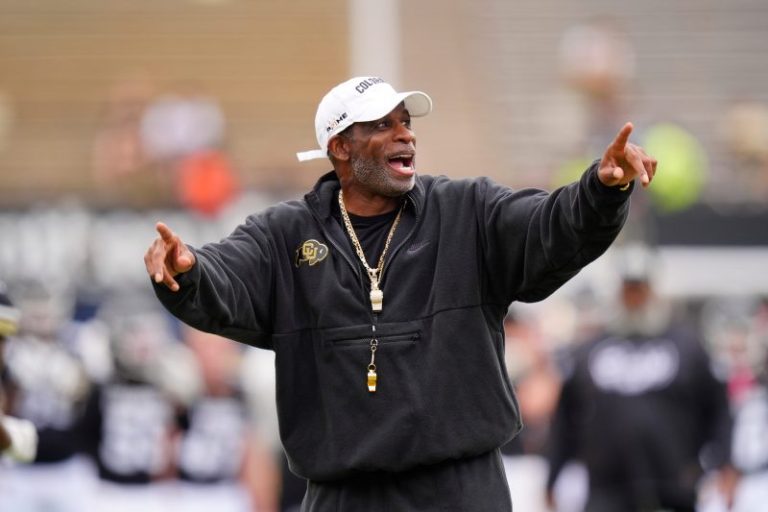
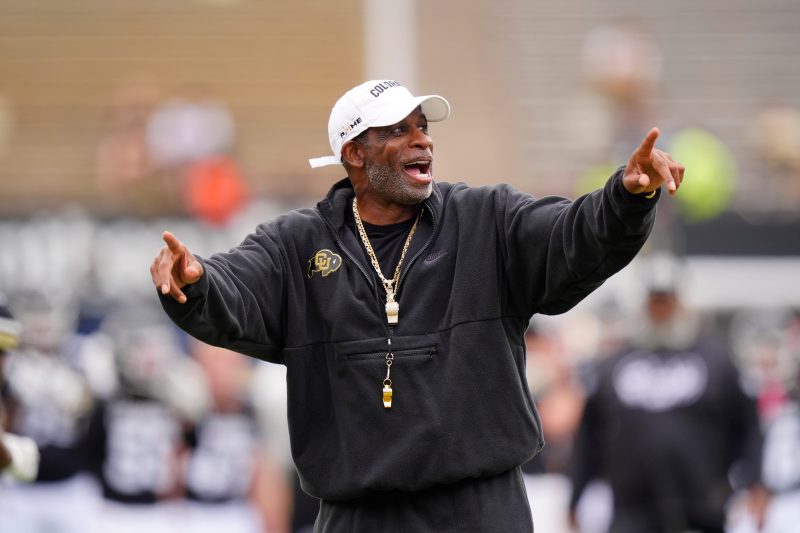
A doctor for Colorado football coach Deion Sanders said he was worried Sanders might need his leg amputated after watching him struggle with pain in a game last October against TCU in Fort Worth, Texas.

Don Jacobs, a vascular surgeon at the University of Colorado, told this to Sanders recently, as shown on Sanders’ Instagram account Feb. 24. Sanders underwent surgery after the game to help clear out blood clots and returned to the sideline a few days later when his team beat Iowa State at home, 24-17

“I was really worried about you in Fort Worth,” Jacobs told Sanders on a FaceTime call with athletic trainer Lauren Askevold. “Watching that game and seeing you hurt, I was worried.”

“I was worried, too,” said Sanders, who added that he needed to be “shot up” to make through the game.

“Yeah, I know that pain hurts, and it was, you know, I was worried about losing a leg, “Jacobs said. “But, you know, we got you out quick… I was impressed, and everything healed up well.”

Sanders, 58, has battled blood circulation issues and blood clots in his lower body since 2021 but recently has been active with long walks on the Boulder campus even after having a cancerous bladder removed in May. The university confirmed in October that Sanders was undergoing an aspiration thrombectomy for the left popliteal and tibial arteries. That means blood clots were being removed from his left leg, which is already missing much of his calf and two toes after a previous amputation.

Jacobs said he thinks Sanders’ future “chances of trouble here is pretty small” especially as new technology helps with “really cleaning it out better.”

Jacobs added he’d like to see Sanders again this summer to “look at it just one more time.”

Colorado opens spring practice March 2 and continues through the annual spring scrimmage on April 11. The Buffaloes open the season at Georgia Tech on Thursday, Sept. 3.

Follow reporter Brent Schrotenboer @Schrotenboer. Email: bschrotenb@usatoday.com

This post appeared first on USA TODAY

Where will A.J. Brown play in 2026?

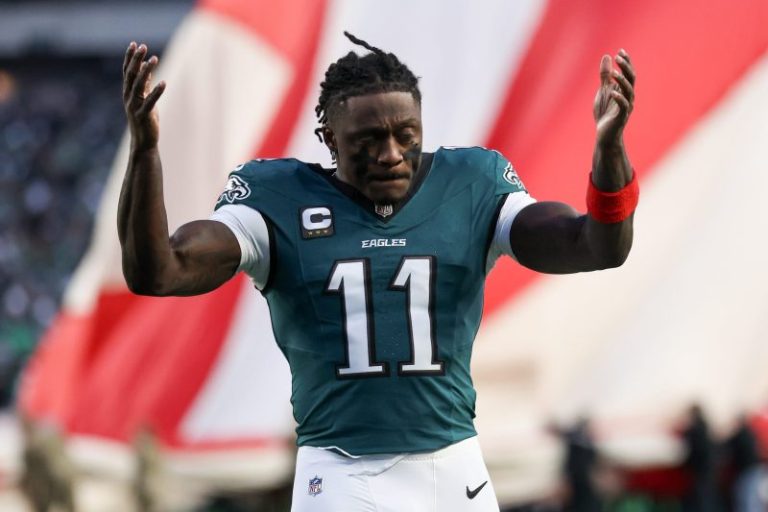
When Philadelphia Eagles head coach Nick Sirianni and general manager Howie Roseman spoke to reporters at the NFL scouting combine on Feb. 24, they did not shut down trade speculation surrounding the Pro Bowl wide receiver. Neither of them expressed any certainty that Brown would be with Philadelphia by the start of the 2026 season.

‘Will A.J. be here next season?’ Sirianni said. ‘I think we’re still in a spot, like, I can’t guarantee how anything is going to play out into next season. I’m thinking I’m going to be the coach next season but you can’t guarantee anything past tomorrow.’

Several times throughout the 2025 season, Brown publicly expressed his frustrations with the Eagles and how they used him in their offense. During a video gaming livestream, Brown called his situation in Philadelphia a ‘(expletive)-show’, and during the Eagles’ wild-card game clash with the 49ers, cameras caught him jawing with Sirianni on the sideline.

‘I think you go into the league year listening to offers for everything and anything,’ Roseman said at the NFL combine. ”Without getting into specifics on any player, we’re always listening and we’re always kind of open.’

Brown has played in 62 games over four seasons with the Eagles, catching 339 passes for 5,034 yards and 32 touchdowns. He won a Super Bowl with Philadelphia last year, and his 5,034 receiving yards as an Eagle rank ninth all-time in franchise history.

In 2025, Brown caught 78 passes for 1,003 yards and seven touchdowns in 15 games.

If the Eagles do end up trading Brown, these four landing spots make a lot of sense:

AJ Brown landing spots

New England Patriots

Outside of the struggles the Patriots had with their offensive line to end their Super Bowl run, the wide receiver position appeared to be one of the weakest points on their roster. Veteran Stefon Diggs led New England with his 1,013 yards in 2025, but he was streaky – some weeks he’d cross over 100 yards in a game before multi-game stretches with fewer than 50 yards. Diggs also wasn’t a big red-zone target for the Patriots, catching just four touchdowns in his first year in New England.

Trading for Brown would give Patriots quarterback Drake Maye a younger, bona fide No. 1 receiver to throw to in 2026. Diggs, Kayshon Boutte, Mack Hollins and DeMario Douglas made up a solid receiving corps in 2025, but Brown would push that unit over the top as a true WR1.

A move like this would also reunite Brown with head coach Mike Vrabel, who was Brown’s first head coach in the NFL during both of their time with the Tennessee Titans. Brown said in a recent appearance on Rob Gronkowski and Julian Edelman’s podcast, ‘Dudes on Dudes,’ that he appreciated Vrabel for holding him accountable during his early years in the league.

‘When I say he holds every single player accountable from top to bottom, I don’t care who it is, like that’s who he is,’ Brown said. ‘And it makes the team come together because nobody is bigger than the team.’

Buffalo Bills

As with the Patriots, one of the Bills’ greatest roster weaknesses is at wide receiver. Since Diggs left Buffalo after the 2023 season, the Bills have not had a receiver cross the 1,000-yard mark. Khalil Shakir has led Bills receivers in both of the last two seasons, but he failed to crest 750 yards in 2025. And no Buffalo receiver had more than five touchdowns.

In 2025, the Bills started leaning especially heavily on running back James Cook, who finished the year with 309 rush attempts for 1,621 yards and 12 touchdowns. Even though former offensive coordinator Joe Brady took a promotion to become the team’s head coach, the Bills’ offense can’t rely on Cook having another season like that with the excessive taxation on his legs from 2025.

Enter Brown, the high-ceiling receiver that would give the Bills their first true WR1 since Diggs left Buffalo after 2023. Adding a receiver like that would help push Buffalo’s offense forward and allow them to deploy a similar strategy to the 2024 Super Bowl-champion Eagles: complement a strong run game with a dynamic passing game, all surrounding a talented, dual-threat quarterback.

Baltimore Ravens

The Ravens have taken swing after swing at drafting a lead receiver in the first round for the last two decades. Travis Taylor in 2000, Mark Clayton in 2005, Breshad Perriman in 2015, Hollywood Brown in 2019, Rashod Bateman in 2021 and Zay Flowers in 2023. Only Flowers, the Ravens’ most recent attempt, has made a Pro Bowl.

Flowers is coming off of the most productive season of his career so far with 86 catches for 1,211 yards, five touchdowns and a second straight Pro Bowl nod. The Boston College product is a dynamic player who excels at creating separation with his route-running and generating yards after the catch. However, Flowers’ 5-foot-9, 182-pound frame has limited his contested-catch ability, something that would give Ravens quarterback Lamar Jackson another tool to work with.

If Baltimore traded for Brown, it would have one of the strongest 1-2 punches at wide receiver in the NFL. Brown would be the bigger-bodied, No. 1 wide receiver option who’s good for 100+ catches, 1,000+ yards and at least five touchdowns per season. Flowers would be the dynamic No. 2 receiver that can work all three levels of the field by streaking open downfield, creating easy separation over the middle or generating yards after the catch on short throws.

Los Angeles Chargers

The Chargers’ plan in the offseason should be building up their trenches in free agency and the draft. But Los Angeles, a team with $81.8 million in cap space, also has the room to take big swings on offensive playmakers like Brown.

None of the Chargers’ leading trio of receivers in 2025 – Keenan Allen, Quentin Johnston and Ladd McConkey – had more than 800 yards. None of them established themselves as the team’s true No. 1 option, either. McConkey led Los Angeles with 789 yards, Allen led with 122 targets and 81 catches, and Johnston led the Chargers with eight touchdown catches in a breakout season.

Now, Allen is hitting free agency ahead of his age-34 season, and the Chargers have brought in Mike McDaniel to be their new offensive coordinator. Adding a wide receiver like Brown to Los Angeles’ roster would give quarterback Justin Herbert a true No. 1 target, while McConkey and Johnston provide dynamic secondary and tertiary options. McDaniel’s offense was at its best in Miami when it had two outstanding wide receivers and a promising young running back to scheme around. With Brown, McConkey and Johnston catching passes and second-year back Omarion Hampton leading the run game, the Chargers’ offense could really break out with a more complex, multi-dimensional look in 2026.

This post appeared first on USA TODAY

The Mexican government said the security situation in the western state of Jalisco has ‘stabilized’ after an explosion of cartel-linked violence following the death of kingpin Nemesio Rubén Oseguera Cervantes, known as ‘El Mencho.’

The Embassy of Mexico in the United States said federal and state authorities were working to normalize conditions after the unrest, reopening transit corridors and restoring public services following targeted operations.

The update comes as the State Department’s travel advisory for Mexico remains in effect at a heightened level of caution, while flight cancellations and transportation disruptions stranded some travelers in popular destinations such as Puerto Vallarta and Guadalajara. Hundreds of Americans remain stranded in Mexico following the violence.

‘The security situation has now stabilized following targeted operations in Jalisco,’ the embassy said in a post on X. ‘Federal and state authorities are proceeding to reopen transit corridors and restore public services smoothly.’

The embassy said airline operations were returning to normal and that international carriers were resuming flights. Puerto Vallarta International Airport has reopened to domestic traffic, according to the statement.

‘If traveling through Jalisco, some local security measures remain in place, while authorities are restoring airport operations to full capacity,’ the embassy added.

Officials said they were coordinating with international partners ‘to ensure safety and stability at all transit hubs and tourist destinations.’

The statement described the operation as part of ‘a broader national effort that has produced a sustained decrease in violence across Mexico in recent months.’

According to the State Department’s official website, Mexico is currently under a Level 2 ‘Exercise Increased Caution’ travel advisory due to risks including crime and kidnapping. The advisory notes that violent crime and organized criminal activity remain concerns for U.S. citizens traveling in the country.

Leavitt warns Mexican drug cartels, tells them not to lay a finger on Americans

Certain Mexican states carry higher risk levels, with some areas classified as Level 3 ‘Reconsider Travel’ or Level 4 ‘Do Not Travel,’ depending on local conditions. Jalisco — where the recent violence occurred — has previously been listed among states with elevated advisory levels, though the State Department notes that risk can vary by region.

The advisory urges U.S. citizens to take precautions similar to those required of U.S. government employees, including avoiding intercity travel at night, using regulated transportation services and remaining aware that emergency services may be limited in some areas.

The State Department said it had received hundreds of calls on its 24/7 crisis hotline as Americans sought assistance following the violence.

Mexican authorities said Oseguera Cervantes was killed Sunday during an operation aided by U.S. intelligence. 

The cartel responded by setting vehicles on fire and erecting roadblocks throughout Guadalajara, the state capital. The city’s international airport operated at limited capacity as violence gripped the area.

The U.S. State Department had previously offered up to $15 million for information leading to his arrest or conviction, describing him as ‘one of the most wanted fugitives in Mexico.’

Related Article

Narcotics expert reveals slain drug kingpin
Narcotics expert reveals slain drug kingpin ‘El Mencho’s’ deadly impact on Americans
This post appeared first on FOX NEWS

Senate Democrats again blocked Republicans’ attempt to fund the Department of Homeland Security (DHS), as Congress gears up for President Donald Trump’s prime time address. 

The largely party-line vote on Tuesday was the first action in the Senate since lawmakers returned from a weeklong break. It’s also the second time Senate Majority Leader John Thune, R-S.D., forced Senate Democrats to decide whether to reopen the agency.

Failure to advance the full-year funding bill ensured that the partial government shutdown, which is only affecting DHS, would stretch into its 12th day.

For now, there’s no clear sign that a compromise deal can be reached. The White House and Senate Democrats have sent counteroffer after counteroffer, but neither side has agreed to the other’s pitch.

And talks between both parties appeared to have petered out during the break.

A source familiar with negotiations told Fox News Digital that negotiations had largely stalled and are expected to resume next week.

‘Dems were holding out for [the State of the Union],’ they said.

The failed vote also comes after the Trump administration took its first steps to put external pressure on Senate Minority Leader Chuck Schumer, D-N.Y., and his caucus to agree to a compromise deal to reopen the agency.

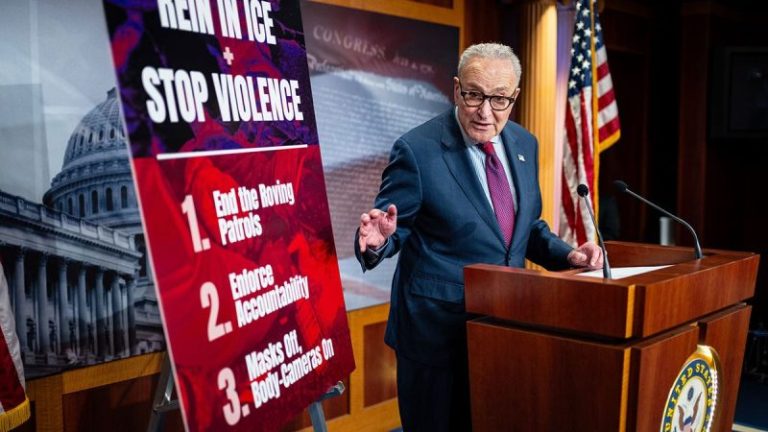
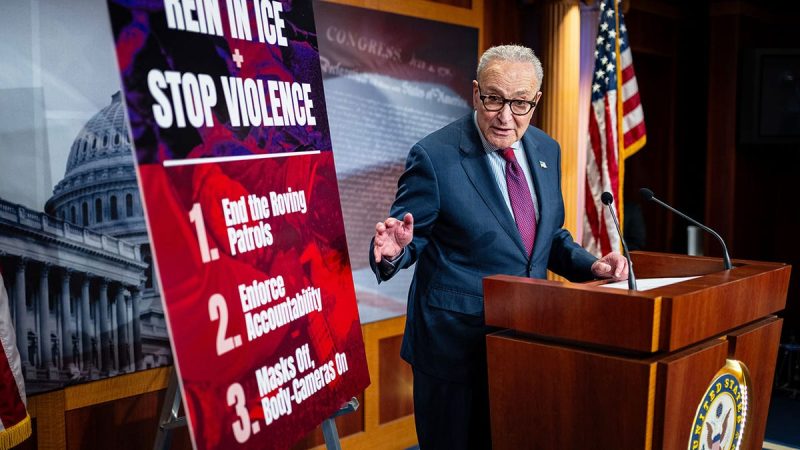
But Schumer charged that the White House is not playing ball with Democrats and their list of reforms for Immigration and Customs Enforcement (ICE). And whether Trump brings up the ongoing negotiations during his State of the Union address could impact Democrats’ calculations going forward.

‘So far they have not budged on the key issues, like masks, like warrants, like oversight from state authorities,’ Schumer said. ‘It depends what he says. So far we’ve heard crickets from them. Nothing. They’re not negotiating. They’re just trying to pass paper back and forth with no real changes.’

Meanwhile, DHS Secretary Kristi Noem announced several emergency measures over the weekend as the agency meanders through its second week of lapsed funding.

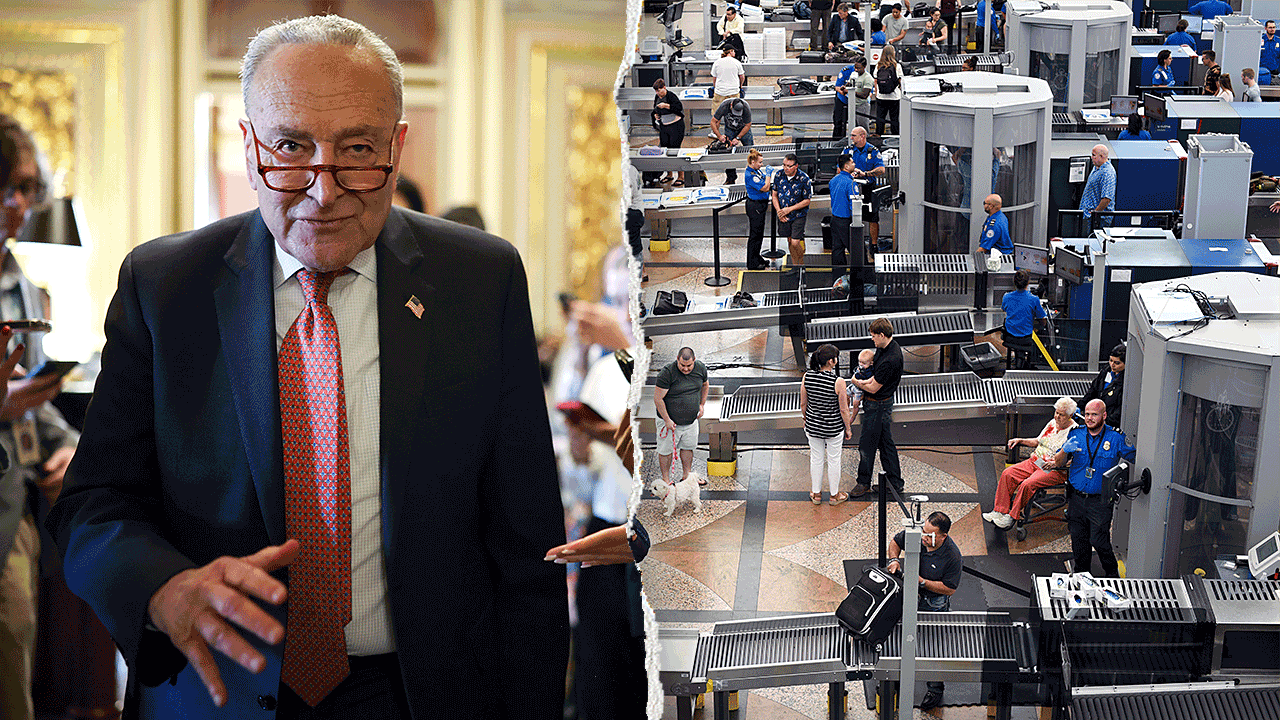
Courtesy escorts for members of Congress have been suspended, and Global Entry at airports has been suspended, as Customs and Border Protection (CBP) agents have been diverted to process travelers.

The Federal Emergency Management Agency (FEMA) has also stopped all public assistance for ongoing disasters, paused non-emergency work, halted non-disaster-related activities, and restricted personnel travel to activities ‘strictly necessary to respond to active disasters and life-safety emergencies,’ according to the agency.

Related Article

Democrats demanding ICE reforms lose airport escorts in shutdown they triggered
This post appeared first on FOX NEWS

The Pentagon has given artificial intelligence firm Anthropic until Friday to lift restrictions on how its Claude AI system can be used by the military, warning it could cancel a $200 million contract or take other punitive steps if the company refuses, according to multiple sources familiar with the discussions.

The skirmish broke out after the Pentagon claimed Anthropic had asked whether its product was used in the January military operation to capture Venezuelan leader Nicolás Maduro, in a way that suggested the company may not approve if it was. The Pentagon insists AI companies must allow products to be utilized for all lawful military use cases — without company oversight or approval. 

Anthropic suggests its red lines are not allowing its products to be used for fully autonomous weapons or mass surveillance of Americans. 

War Secretary Pete Hegseth delivered an ultimatum during a Tuesday meeting at the Pentagon with Anthropic CEO Dario Amodei, even as Hegseth praised the company’s technology and said the department wants to continue working with the firm, sources said.

Hegseth told Amodei that if the company did not allow Claude to be used for all lawful purposes, it could face termination of its Pentagon contract, designation as a supply chain risk — potentially limiting its ability to work with defense vendors — or possible invocation of the Defense Production Act to compel access to the technology, according to sources familiar with the meeting.

Claude is currently the only advanced, commercial AI model of its kind operating inside the Pentagon’s classified networks, under a $200 million contract awarded in summer 2025, significantly raising the stakes of the dispute.

Pentagon officials argue the Department of Defense cannot depend on a private company that maintains categorical restrictions on certain uses of its technology, even if those uses are lawful. During the meeting, Hegseth compared the situation to being told the military could not use a specific aircraft for a mission, according to a source familiar with the exchange.

The dispute represents an early test of who controls the guardrails on advanced AI inside U.S. defense systems — private companies or the Pentagon. The outcome could shape how the military partners with leading AI developers as it moves to integrate more powerful machine learning tools into national security operations.

Anthropic, which has branded itself as a safety-oriented AI company, has said its policies are meant to reduce the risk of misuse as advanced AI systems become more powerful.

During the meeting, Amodei walked through those restrictions and argued restrictions would not interfere with lawful, legitimate War Department operations, according to a source familiar with the meeting. 

A senior Pentagon official claimed its position ‘has nothing to do with mass surveillance or autonomous targeting’ because ‘there’s always a human involved and the department always follows the law.’ 

Even as tensions rose, officials on both sides indicated that fully autonomous weapons are not currently contemplated under the department’s lawful use framework, suggesting the clash is as much about control as about battlefield applications.

During Tuesday’s meeting, Hegseth explicitly referenced potential use of the Defense Production Act, termination of Anthropic’s existing contract and the possibility of designating the company a supply chain risk if it does not agree to allow its products to be used for all lawful purposes, sources said.

Such steps reflect two very different forms of federal leverage. 

A supply chain risk designation could restrict Anthropic’s ability to work with federal vendors and contractors by signaling the company poses reliability or governance concerns, while invoking the Defense Production Act would represent a rare attempt to use national security authorities to compel access to frontier AI systems deemed critical to defense needs.

Terminating the contract would carry consequences beyond ending a vendor relationship. Because Claude is currently embedded inside the Pentagon’s classified networks in a $200 million agreement, cancellation could disrupt existing workflows and require the department to transition sensitive systems to an alternative provider.

Pentagon officials also said Elon Musk’s Grok AI chatbot has agreed to allow its products to be used for all lawful purposes, including potential integration into classified systems, and that other frontier AI firms are ‘close’ to similar arrangements. 

Grok did not immediately respond to a request for comment.

Anthropic, in a statement attributed to a company spokesperson, said: ‘Anthropic CEO Dario Amodei met with Secretary Hegseth at the Pentagon this morning. During the conversation, Dario expressed appreciation for the Department’s work and thanked the Secretary for his service. We continued good-faith conversations about our usage policy to ensure Anthropic can continue to support the government’s national security mission in line with what our models can reliably and responsibly do.’

Related Article

Top AI firm alleges Chinese labs used 24K fake accounts to siphon US tech
This post appeared first on FOX NEWS

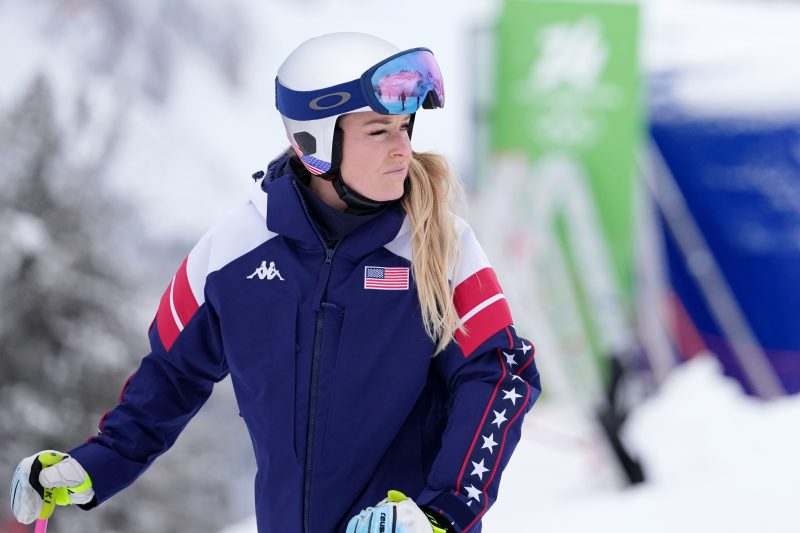
Amid her continued recovery from a severe leg injury, Lindsey Vonn has received support from soccer legends Cristiano Ronaldo and Zlatan Ibrahimović.

On Monday, Feb. 23, Vonn revealed she could have lost her leg as the result of her crash in the downhill at the Milano Cortina Olympics earlier this month.

The skiing star said that in addition to complex tibial fracture in her left leg, she had a tibial plateau fracture and fractured fibular head. She also broke her right ankle. Vonn said her severe injuries led to compartment syndrome, which could have resulted in her leg being amputated.

‘Compartment syndrome is when you have so much trauma to one area of your body, that there’s too much blood, and it gets stuck, and it basically crushes everything in the compartment,’ Vonn said in an Instagram post.

‘All the muscle and nerves and tendons, it all kind of dies. And Dr. Tom Hackett saved my leg. He saved my leg from being amputated.’

Vonn received thousands of supportive comments on her Instagram post, including from global icons Ronaldo and Ibrahimović.

‘Champions are defined by the moments they win, and the moments they refuse to give up,’ Ronaldo said. ‘@lindseyvonn the mountains you conquered were never bigger than the strength you carry. Keep fighting. Legends always rise.’

Ibrahimović added simply: ‘Giving up is not an option.’

Vonn was hospitalized in Italy for a little over a week before being transferred to a hospital in Colorado. She said she is hoping to be on crutches in a few weeks, with the bones unlikely to fully heal for a year.

The 41-year-old will then decide whether to undergo surgery for the torn ACL she suffered in the same leg a week before the Olympics started.

This post appeared first on USA TODAY

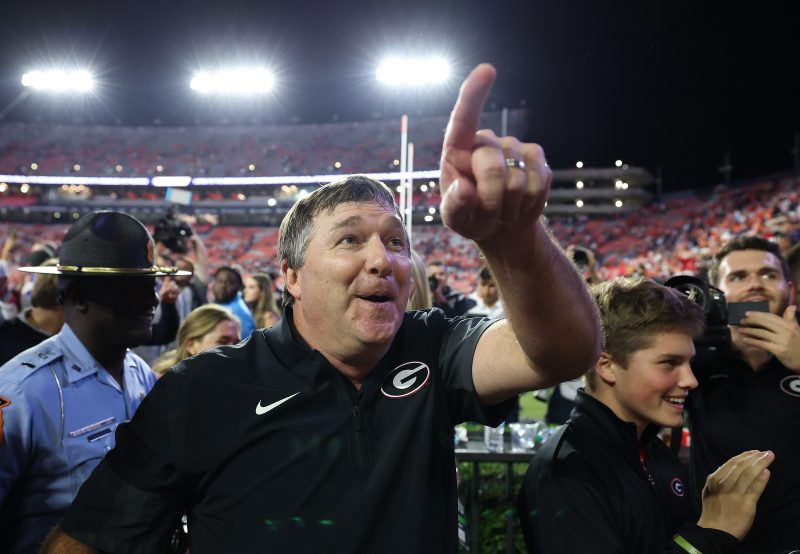
The 2026 college football season is still six months away, but Kirby Smart and Mario Cristobal are already going at it.

Speaking at the Steve Spurrier Awards in Gainesville, Florida, the two coaches traded verbal jabs fit for any celebrity roast.

Smart was on the mic talking about Georgia defensive back Ellis Robinson IV, who was being honored as Freshmen Defensive Player of the Year. Talking about Robinson IV’s parents, Smart got to work on his comedy routine.

‘He was a joy to recruit. We had a great time with the family,’ Smart said. ‘They were going back and forth about the 50th birthday party (dad) got, and the 50th party (mom) got, and it wasn’t quite the same. Mama wins out when it comes to that. We probably sponsored that trip with all the NIL money we spent… that’s alright, they deserve it.

‘Mario is right behind them and if it would have been up to him they would have paid a lot more NIL money because it came down to us two, so I don’t like you being real close to Mario right now, you know what I’m saying. (Robinson’s) still got another year left. You gotta be careful around Mario, sometimes he’ll take your players, you know what I mean. No, I’m just kidding.’

Quarterback Carson Beck transferred to Miami from Georgia after the 2024 season and led the Hurricanes to the national championship game this winter.

‘I was talking to Mario earlier and he came up to me and gave me a Lane Kiffin joke. And he and Lane are very similar in a lot of ways,’ Smart said. ‘They’re like best friends, and he came up to me, and he said, ‘You have to start getting on some protein shakes, you’ve had too many carbs.’ And I said well you probably need to spend some time with Steve Spurrier because he won more title conferences at Duke than you have at Miami.’

In his closing, Smart said, ‘I gotta get out of here before Mario goes because I don’t want to hear any (expletive) from him.’

It didn’t take long for the (expletive) to come Smart’s way as Cristobal then got his chance for payback.

‘It’s great to watch what a player like Carson Beck can do with great coaching, you know what I mean,’ Cristobal joked.

‘Let’s give it up for Kirby Smart. If it wasn’t for all his years of pre-NIL, we wouldn’t have NIL right now anyways.’

‘Robinson family,’ Cristobal continued, ‘nice to see you. We leave at 9:30 on the real jet. We have more than one restaurant in Miami as opposed to Athens.’

‘You gotta give a guy like Kirby credit. When you have all that time to sit at home watching us play on TV throughout the playoffs, when you don’t take care of business… You know, congratulations on the SEC, the championship, that’s awesome. We were 5-0 against the SEC, I don’t know what you were.’

Unfortunately, Miami and Georgia don’t play in the regular season in 2026. But maybe they’ll get to meet each other in the CFP to see who gets the last laugh.

This post appeared first on USA TODAY
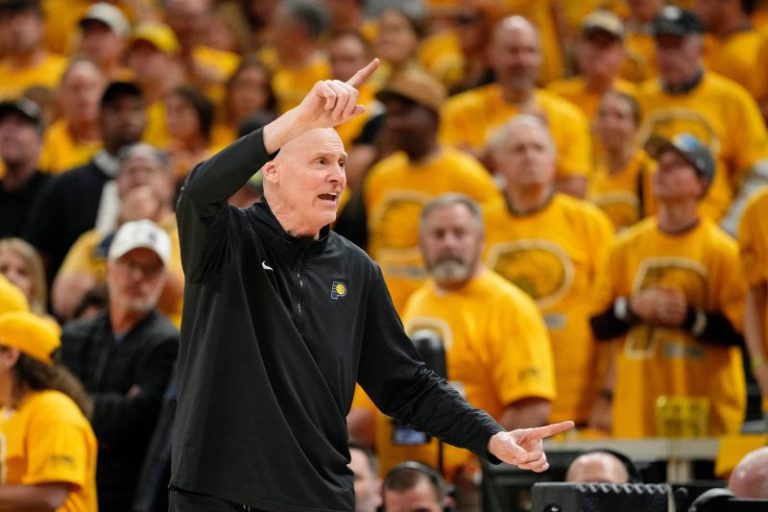
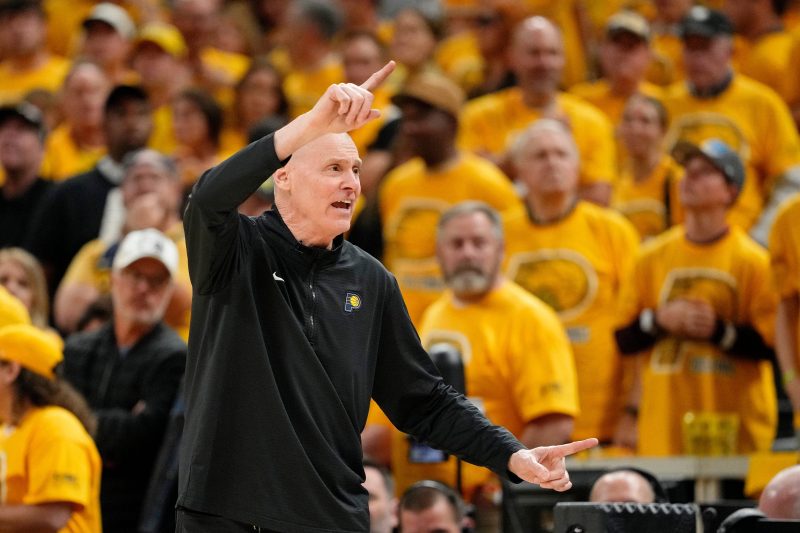
As the NBA faces ongoing concerns about tanking, Indiana Pacers coach Rick Carlisle fired back at the league over its recent $100,000 Player Participation Policy fine, calling the discipline “ridiculous” and “shocking.”

During a radio interview with 93.5 The Fan Tuesday, Feb. 24, Carlisle publicly addressed the fine for the first time and centered his rebuke around the availability of guard Aaron Nesmith during a Feb. 3 game against the Jazz, a 131-122 Utah victory.

“I didn’t agree with it,” Carlisle said during the interview. “There was a league lawyer that was doing the interview that kind of unilaterally decided that Aaron Nesmith, who had been injured the night before and couldn’t hold the ball, should’ve played in the game, which seems ridiculous.”

The league announced the discipline Feb. 12, just days before the NBA All-Star Game. Headed into the game, the Pacers were 13-37 and continuing to languish in last place in the Eastern Conference.

For its part, the NBA responded to Carlisle’s allegations, disputing his account.

“Coach Carlisle’s description of the process that went into the decision to fine the Indiana Pacers is inaccurate,” an NBA spokesperson said in a statement sent to USA TODAY Sports. “An independent physician led the medical review. In addition, the Pacers’ General Manager and the team’s Senior Vice President, Sports Medicine and Performance were interviewed as part of the process.

“The Pacers confirmed that it had provided all of the information requested by the league and the team reported that an interview with Coach Carlisle or a team physician wasn’t necessary.”

After pushing the eventual-champion Oklahoma City Thunder to Game 7 of the NBA Finals, the Pacers have struggled to compete this year because of injuries, most notably the ruptured Achilles tendon star point guard Tyrese Haliburton suffered early in that Game 7.

Indiana is currently 15-43, which is last place in the East and the NBA’s second-worst record.

“During the interview process — I was not on it, but I heard details — we asked them if they wanted to talk to the doctors, our doctors about it, because it was something that was documented by our doctors and trainers,” Carlisle continued. “They said no, they didn’t need to, they talked to their doctors, who did not examine Aaron Nesmith. And we asked them if they wanted to talk to the kid, and they said no, they didn’t need to.

“This was shocking to me. During the interview, they also asked if we considered medicating him to play in a game when we were 30 games under .500, so I was very surprised.”

During the radio interview, however, Carlisle didn’t discuss the statuses of All-Star forward Pascal Siakam — who was directly named in the disciplinary memo — and another, unnamed “star player” under the league’s Player Participation Policy.

In the letter, the NBA said Siakam and the two star players “could have played under the medical standard in the Policy, including by playing reduced minutes” and added that “the team could have held the players out of other games in a way that would have better promoted compliance with the Policy.”

Presumably, the other star player the league was referencing was either shooting guard Bennedict Mathurin (rest) or point guard Andrew Nembhard (injury/illness); both recorded DND (did-not-dress) designations for the game.

Siakam’s DND was given a rest designation.

Guard T.J. McConnell and center Micah Potter also did not dress, with injury/illness designations.

“Overt behavior like this that prioritizes draft position over winning undermines the foundation of NBA competition and we will respond accordingly to any further actions that compromise the integrity of our games,” NBA Commissioner Adam Silver said Feb. 12 in a statement. “Additionally, we are working with our Competition Committee and Board of Governors to implement further measures to root out this type of conduct.”

In the same disciplinary announcement, the Jazz were also fined $500,000 for separate game management decisions related to tanking.

This post appeared first on USA TODAY