Author

admin

Browsing

Teams competing in the World Baseball Classic have a most delicate task: Carve out a legacy in less than two weeks.

Yet despite the microwaved format that’s inverse to how we typically watch the sport and assess greatness, the five championship teams all managed to both showcase their talents, conserve their resources and suppress some pretty elite competition to hoist the trophy at tournament’s end.

The WBC has changed almost as much as the sport itself in two decades. Ranking the best of the best is certainly a dicey proposition, as several mini-eras have emerged in the game during that span.

Still, some squads shined a bit brighter. With that, ranking the five WBC champions as the 2026 edition gets under way March 5:

5. Japan 2006

Record: 5-3, 60-21 run differential

Pool play: 2-1 (Lost to Korea 3-1, beat China 18-2, beat Chinese Taipei 14-3)

Second round: 1-2 (Lost to Korea 2-1, lost to USA 4-3, beat Mexico 6-1, advanced on tiebreaker among USA, Mexico, Japan).

Semifinals: Beat Korea 6-0.

Final: Beat Cuba 10-6

Star power: Daisuke Matsuzaka – one year away from making the leap from Japan to the Boston Red Sox for a total commitment of $103 million – won all three of his starts, giving up three earned runs in 13 innings, a 1.38 mark, striking out 10. Ichiro Suzuki showed he was still in the peak of his MLB career, ripping 12 hits in 33 at-bats and producing a .964 OPS.

And while Koji Uehara was most renowned stateside as a reliever, including with the 2013 champion Red Sox, he was a dominant starter then, having won 20 games as a 24-year-old in 1999. In this WBC, he was unbeaten in three starts with 16 strikeouts to zero walks. Uehara avenged Japan’s two previous losses to Korea, pitching seven shutout innings with eight strikeouts in the semifinals.

Championship: Matsuzaka tossed four innings of one-run ball while Suzuki reached base three times and scored three runs to subdue Cuba.

Legacy: They’re the lone WBC champ to suffer three losses, dampening the ledger a bit. Yet it was a harbinger for the next decade in the game, as Matsuzaka, Nori Aoki and Aki Iwamura went on to populate our TVs in subsequent Octobers.

4. Dominican Republic 2013

Record: 8-0, 36-14 run differential

Pool play: 3-0 (Beat Puerto Rico 4-2, beat Spain 6-3, beat Venezuela 9-3)

Second round: 3-0 (Beat Italy 5-4, beat USA 3-1, beat Puerto Rico 2-0)

Semifinals: Beat Netherlands 4-1

Finals: Beat Puerto Rico 3-0.

Star power: Robinson Cano, on a fast track to Cooperstown at the time, banged out 15 hits, two homers and a 1.296 OPS. Nelson Cruz and Jose Reyes contributed 10 and 11 hits, respectively while Hanley Ramirez, 29, and Carlos Santana, 27, each hit a pair of homers. Even 39-year-old Miguel Tejada put up a .316/.350/.368 line.

Hard to believe the lone unbeaten champ in WBC history called upon Sam Deduno as its ace, but he gave up one earned run in 13 innings (0.69 ERA) of three starts. Edinson Volquez also started three games but struggled, striking out nine but walking six. That’s OK – the bullpen was heroic. Fernando Rodney – who saved seven of their eight wins – Pedro Strop, Santiago Casilla, Octavio Dotel and Kelvin Herrera gave up zero runs and 11 hits across 28 innings.

Championship: Deduno pitched five shutout innings against a Puerto Rico lineup with 36-year-old DH Carlos Beltran and Yadier Molina in the middle, but precious little else. And, of course, Dotel, Strop and Casilla combined for four innings of one-hit, no-run relief.

Legacy: It’s tough to argue with an unbeaten squad, and the bullpen managed to hold down the fort. But the lack of a true No. 1 – and the tepid opponent they faced in the final – downgrades the Dominicans just a bit here.

3. USA 2017

Record: 6-2, 41-21 run differential

Pool play: 2-1 (Beat Canada 8-0, lost to Dominican Republic 7-5, beat Colombia 3-2)

Second round: 2-1 (Beat Venezuela 4-2, lost to Puerto Rico 6-5, beat Dominican Republic 6-3.

Semifinals: Beat Japan 2-1

Finals: Beat Puerto Rico 8-0

Star power: The home team finally got one, though it was due in large part to high-end grinders rather than superstars. Shortstop Brandon Crawford and Eric Hosmer each had 10 hits and OPSes north of 1.000. Christian Yelich scored a team-high seven runs. And the consensus starting squad had Gold Glovers (Buster Posey, Hosmer, Ian Kinsler, Crawford, Nolan Arenado, Adam Jones, Yelich, Andrew McCutchen) at every position.

Marcus Stroman carried, starting three games, pitching 15 1/3 innings with a 2.35 ERA and 0.91 WHIP. Danny Duffy started and won two games, including the must-win quarterfinal against the Dominicans. Luke Gregerson and Pat Neshek combined for nine innings of scoreless relief.

Championship: Stroman pitched six innings of one-hit ball, while Kinsler – who also homered – Yelich, Arenado, McCutchen and Giancarlo Stanton each had two-hit games. Puerto Rico started Seth Lugo and had a star-studded lineup compared to its 2013 finalists: Francisco Lindor, a young Carlos Correa, Beltran, Molina and Javy Baez.

Legacy: This team remains the only group that beat all the Latin American powers – Venezuela, the Dominican Republic and Puerto Rico – as well as Japan to win it all. And this WBC marked a turning point, with Jones’ home run robbery of Manny Machado in the quarterfinals at Petco Park turning it into a can’t-miss event.

2. Japan 2009

Record: 7-2, 50-16 run differential

Pool play: 2-1 (Lost to Korea 1-0, beat Korea 14-2, beat China 4-0)

Second round: 3-1 (Beat Cuba 6-0, lost to Korea 4-1, beat Cuba 5-0, beat Korea 6-2)

Semifinals: Beat Venezuela 10-2

Finals: Beat Korea 5-3

Star power: Perhaps the apex of Japanese talent, both old and new. Suzuki banged out 12 more hits and scored seven runs, and Aoki also had a dozen hits and drove in seven. Catcher Kenji Johjima never found stardom with the Seattle Mariners but had a 10-for-30 WBC with a home run.

Meanwhile, Matsuzaka was back, as he posted a 2.86 ERA and Japan won all three of his starts, but this time he had company. Yu Darvish, the 22-year-old who was still three years away from debuting with the Texas Rangers, struck out 20 in 13 innings with a 1.000 WHIP. And Hisashi Iwakuma, who won 63 games in six seasons with the Mariners, posted a 1.35 ERA in three starts an a relief appearance.

Final vs. Korea: Iwakuma pitched four-hit ball into the eighth and Suzuki had four hits, including a two-out, two-strike two-run single in the top of the 10th inning off Chang Hong Lim, giving the WBC a thrilling finish that wouldn’t be matched for 14 years.

Legacy: Let it be known that the Japanese WBC squads of the aughts struggled mightily with Korea. But they were more or less unbeatable otherwise and this team’s pitching depth separates it from almost all the champions.

1. Japan 2023

Record: 7-0, 56-18 run differential

Pool play: 3-0 (Beat Korea 13-4, beat Czechia 10-2, beat Australia 7-1)

Quarterfinals: Beat Italy 9-3

Semifinals: Beat Mexico 6-5

Finals: Beat USA 3-2

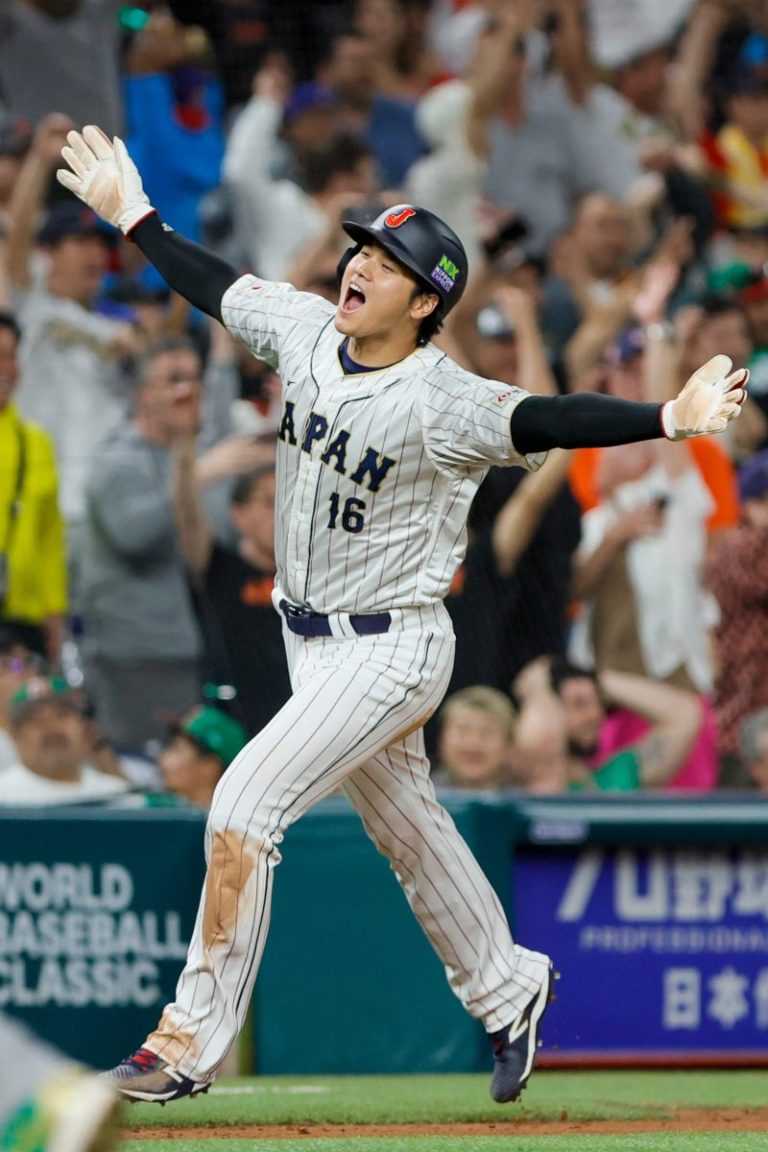
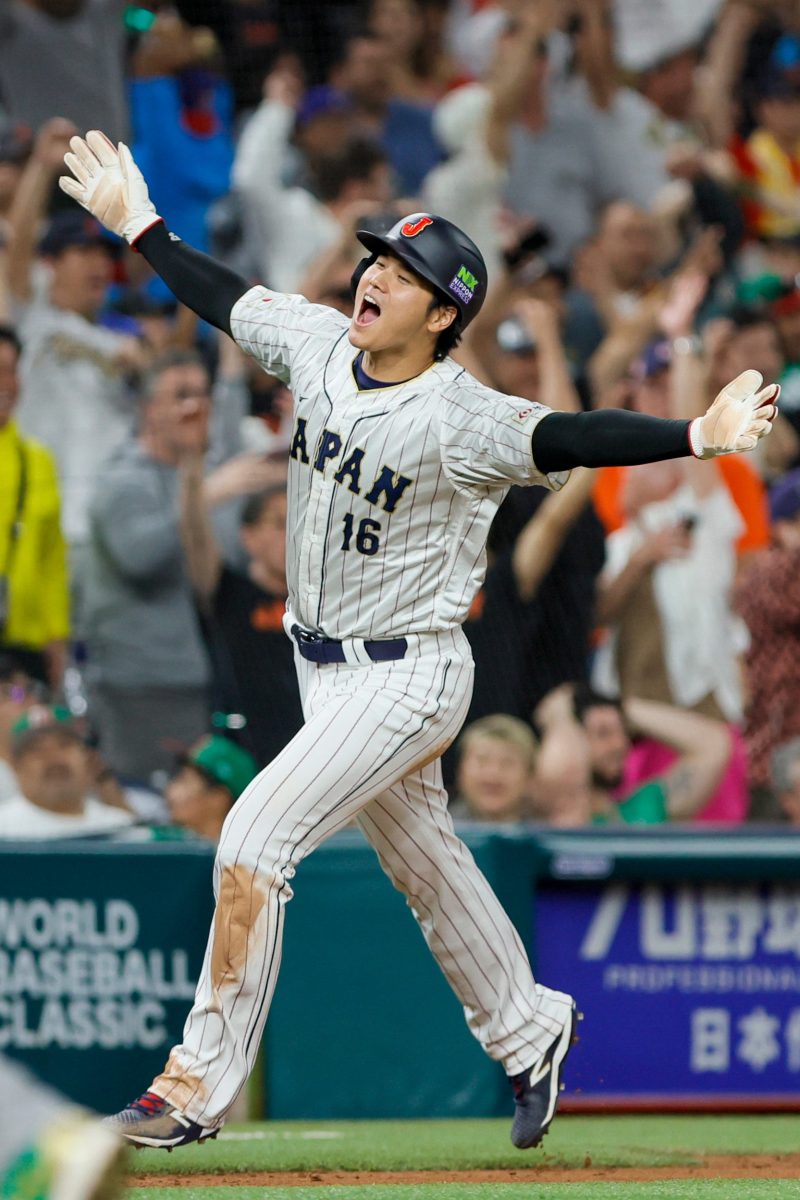
Star power: Might be oversimplifying it to say any team with Shohei Ohtani is a default No. 1. Yet he truly never disappoints. Ohtani led Japan with 10 hits and 10 walks, produced a 1.345 OPS and, on the mound, a 1.86 ERA in winning both his starts and adding his epic relief strikeout of Mike Trout to end the championship. Munetaka Murakami – catch him on Chicago’s South Side this spring – produced an .845 OPS while American-born Lars Nootbaar posted a .424 OBP.

Future Los Angeles Dodgers teammate Yoshinobu Yamamoto had his international coming-out party, striking out 12 in 7 1/3 innings. The youngsters – Shota Imanaga, Rōki Sasaki and Yamamoto – ensured that Darvish, now 36, could get hit a little harder and Japan survived it.

Final vs. USA: Ohtani’s strikeout of Trout was the Polaroid moment; home runs from this year’s spring curiosities – Murakami and Kazuma Okamoto of the Toronto Blue Jays – pushed them toward victory. Kyle Schwarber got Team USA within 3-2 with a solo homer, but that only made Ohtani’s heroics all the more necessary.

Legacy: It’s debatable whether this squad is deeper overall than the 2009 edition; it will take a few seasons to gauge Murakami and Okamoto’s MLB production to further contextualize the talent. But any team with Ohtani already has a massive edge – and he proved it emphatically.

The USA TODAY app gets you to the heart of the news — fastDownload for award-winning coverage, crosswords, audio storytelling, the eNewspaper and more.

This post appeared first on USA TODAY

NEW YORK — Chet Holmgren knew that, for the Oklahoma City Thunder, it could’ve gone the other way.

Minutes before he tried to fit his 7-foot-1 frame into a padded folding chair here at Madison Square Garden, his team escaped with a 103-100 win Wednesday, March 4 over the Knicks that didn’t come without drama.

New York whittled an eight-point deficit inside the final three minutes, eventually putting up a pair of clean looks inside the final six seconds with the chance to tie the game. The first shot was long — the second one, short.

And so, the Thunder outlasted New York in another reminder that, for Oklahoma City, things won’t come easy.

“We made enough plays down the stretch on both ends to close it out,” Holmgren told reporters. “They made some plays, too — they just didn’t quite convert. If they do, it’s a different-looking game.”

This Thunder team isn’t nearly as dominant as the one that won the championship last season. For one, Oklahoma City already has more losses (15) than it did last year (14), with 18 games still remaining. For another, points are more difficult to come by; this season’s Thunder ranks seventh in offensive rating, scoring 116.9 points per 100 possessions, after it ranked third in the league (119.2) last year.

Ultimately, it may not matter. The Thunder (49-15) remain the best team in the NBA and are a legitimate threat to become the first team to repeat as NBA champions since the Warriors did so in 2018. This is only magnified when you consider that they’ve done all this despite being saddled with injury issues since training camp.

Jalen Williams, an All-Star last season, has played just 26 games and is currently out with a strained right hamstring. Shai Gilgeous-Alexander just returned from a nine-game absence. Center Isaiah Hartenstein has played just 35 games, and he left the Knicks game Wednesday midway through the third quarter with left calf tightness. Alex Caruso (left hip contusion) was also knocked out.

But as they have all season long, role players filled in.

“We’re a pretty deep team,” Gilgeous-Alexander said after the game. “With the injuries we’ve gone through this year, for us to still be in the mix for the top seed in the league and in the West is pretty impressive.”

Against the Knicks, third-year guard Cason Wallace started his 51st game of the season. He was the primary defender on Knicks All-Star Jalen Brunson and swiped 4 steals on the night. Veteran forward Kenrich Williams played just 6:13 in the game — all in the fourth quarter — and hit a big 3 early in the period that quieted a New York run.

“It just speaks to the guys that have had to step up, like Isaiah Joe, Cason — the past few weeks have transformed their game and have shown what they can be as basketball players in big roles,” Gilgeous-Alexander said. “Guys like myself come back and kind of diminish their role and it’s a little bit unfair. Hats off to those guys for doing whatever the team asks from them, literally. If the team asks them to do more, they do more. If the team asks them to do less, they do less.

“To win a championship, no matter how good your best players are, you need to have those guys on your team. We know that, and we’re thankful for them, for sure.”

Prior to Wednesday night’s game, Williams went through an extended shootaround session in which he moved with ease and didn’t appear hampered whatsoever. He was loose, he joked with Gilgeous-Alexander, and he laced shot after shot.

If he can stay on the floor, he’ll provide a massive boost for the Thunder on both sides, especially late in games. Williams earned All-Defensive second-team honors last season and his shot creation in the NBA Finals helped the Thunder close the Pacers.

Yet, the final 18 games of the regular season will test this team more than any stretch since winning the title. According to Tankathon.com, the Thunder have the NBA’s third-toughest remaining schedule (.535), and Oklahoma City only has a 3½-game lead on the Spurs for the top seed in the West.

And if the Thunder are to retain the No. 1 seed, it will be because of games like these — games against great teams, on the road in iconic venues — games in which the Thunder are shorthanded, for them to pave the foundation to get there.

“I don’t have pixie dust,” Thunder coach Mark Daigneault said. “It’s those guys. They’re the ones executing. They’ve got the competitive maturity at this point to understand how to win. That doesn’t mean we’ll win every game, but they understand the path you have to walk through.

“Their ability to click in the way they did tonight is a necessary skill. And it’s great for us to get experiences like this — and have success in those experiences. That’s how you build your muscle through the course of the regular season to make yourself as mentally tough as you can be.”

This post appeared first on USA TODAY

Pull up a chair, and take a load off, everyone. And soak in the world around you. 

Forget about football or winning and losing, or championships and near-misses. That’s the very last thing Lou Holtz would’ve wanted any celebration of life to include. 

Not that football wasn’t part of Holtz’s story, but that his life story — the last chapter finally played out Wednesday, March 4, after 89 full years — was so much more than that. This is about life and love, and finding the very best of who and what you are. 

If that included the football field, great. But it wasn’t the message Holtz delivered over and over, through decades of coaching football and years on the speaker circuit.  

This is the Gospel of Lou.

“Everybody wants to win. I always used to ask my players, ‘Can you live with losing? Can you live with failure?’ That’s life’s motivator.”

Years ago when I lived in Orlando, I went to see Holtz speak to the Orlando Touchdown Club, a lively group of a couple of hundred that used to meet at the old Citrus Bowl Stadium before it was rehabbed a couple of times. 

I still have the notebook from that day, because by the time Holtz finished speaking, it was clear why he was paid thousands all over the country to spread the gospel. It was more than motivation, Holtz had the rare ability to make you think ― long after hearing him speak.

See Lou Holtz commemorative section

Every speech hit the same talking points, each tweaked to fit the audience, the locale, the moment. 

From the billion dollar Ford Motor Company in Dearborn, Mich, to the folksy yet fiery Little Rock Touchdown Club, to all of those companies and clubs between, Holtz spread the message. He used football analogies to underscore the points he was making. 

It wasn’t about Notre Dame or South Carolina or Arkansas or the New York Jets, it was about being the best you. And how every day is a chance to change. 

“If you’re bored with life, you haven’t set your goals high enough.”

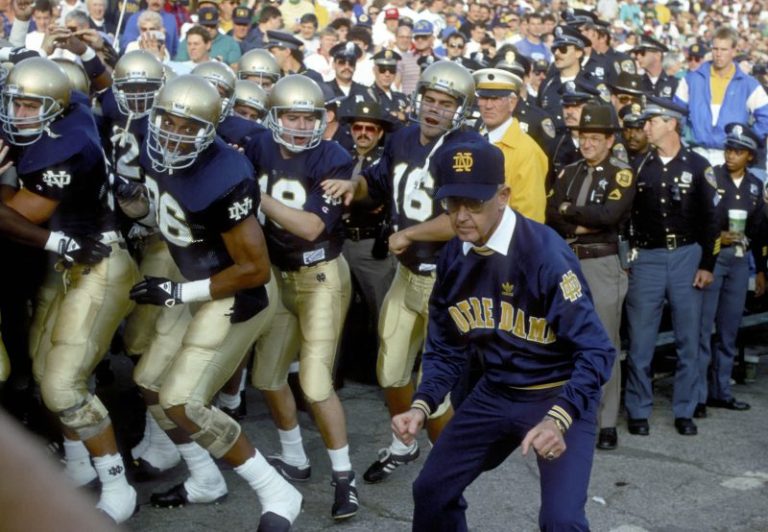
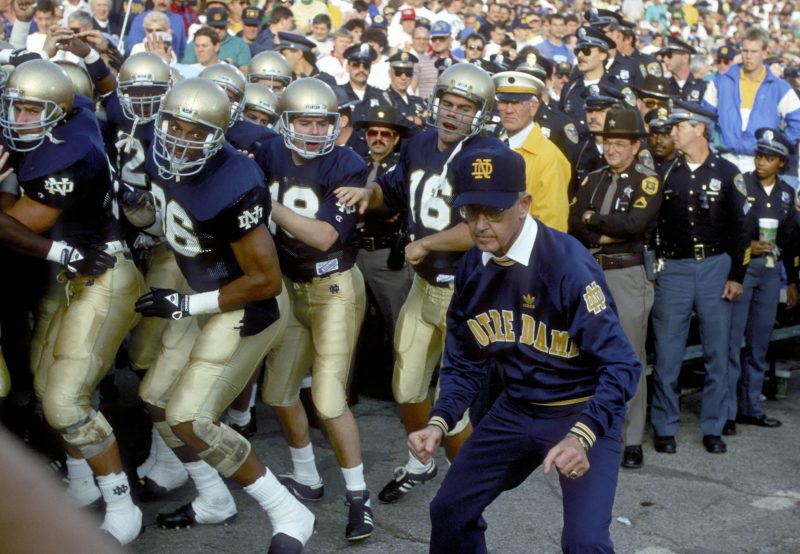
He’s the only coach in NCAA history to lead six schools to bowl games, back when bowl games actually meant something. When he retired from Notre Dame and walked off the field in South Bend for the last time in November of 1996, he did so specifically knowing he was six wins shy of setting the school record for victories.

He could’ve stayed at least another year and set the record (later broken by Brian Kelly), but said there was only one greatest ever coach at Notre Dame. And who was he to win more games than Knute Rockne?

He loved stalking the sidelines, lived for beating USC. He cherished those early Saturday morning prayers at the Grotto, and the Concert on the Steps at Bond Hall — before he and his team even stepped on the grass at Notre Dame Stadium.

He was quick to point out every game was played amid the loving, open arms of Touchdown Jesus, and the 4,000-pound gold statue of the Virgin Mary on top of the tallest building on campus. Or as Holtz called her, the Lady on the Dome. 

These were rare life experiences, and if you aren’t chasing life’s thrills every day, what exactly are you doing?

“Are you committed, or are you the kamikaze pilot who flew 42 missions?”

Holtz was always committed to teaching and preaching, and the facilitator was football. Maybe that’s why he only stayed away from the game for two years after leaving Notre Dame. 

He took a job with the ragtag program at South Carolina, and didn’t win a game in his first season. He then won 17 games over the next two seasons, and finished each with a victory in the Outback Bowl.

But it eventually fell apart over the next three seasons, ending in 2004 with what Holtz routinely described as his biggest professional disappointment: a brawl after the rivalry game with Clemson. 

He never coached again. Football, anyway. 

“No one has ever drowned in sweat.”     

He won 249 games as a college coach, and three lousy games in one season with the NFL. When he quit his job with the Jets with one game remaining in the 1976 season, Holtz declared, “God did not put me on this earth to coach professional football.”

More likely, God put Lou Holtz on the earth to preach.

When he spoke, his unique voice and delivery — and the escalating, booming sound of his voice, despite his lisp, driving home point after point — had every person in every room on the edge of their seat. 

Not unlike the way he motivated his players, typically poor-mouthing them in public while winding them up privately. Before maybe the biggest game of his Notre Dame coaching career, when loaded Miami came to South Bend in 1988 and the pre-game devolved into Catholics vs. Convicts, Holtz got his team zeroed in like only he could. 

He spoke about the Canes and the bombastic bravado of their players and coach Jimmy Johnson, and how this Notre Dame team would take it all from them. Then right on cue — his voice rising to that unique crescendo — he said, “But save Jimmy Johnson’s ass for me!”

The Irish then went out and beat the Canes 31-30. 

“It’s not the load that breaks you, it’s the way you carry it.” 

Holtz often spoke of his time at Arkansas, where his first team in 1977 famously won the Orange Bowl over 18-point favorite Oklahoma — despite Holtz suspending three starters days before the game after an incident at their dorm. 

Holtz used to speak of driving to work in Fayetteville, and how every day he’d cruise by a cemetery. The enormity of the moment was never lost. 

“I thank god I have the opportunity to solve my problems. We tend to look at how bad things are instead of picking up ourselves up and embracing the wonderful opportunities we have.”

And that, everyone, is the Gospel of Lou. 

This post appeared first on USA TODAY

SCOTTSDALE, AZ — He is the only retired pitcher on the USA’s World Baseball Classic roster.

He’s also the only one with three Cy Young awards, three World Series championships, and 11 All-Star appearances.

And is the lone WBC pitcher who can already make reservations for his Hall of Fame induction in five years.

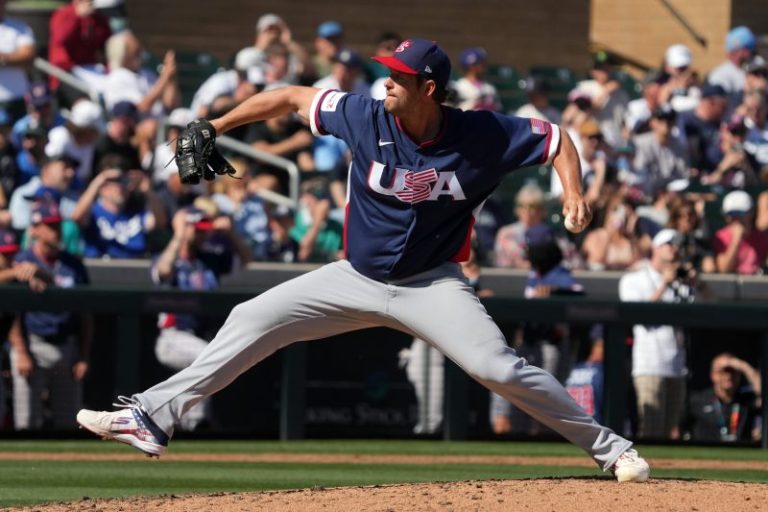
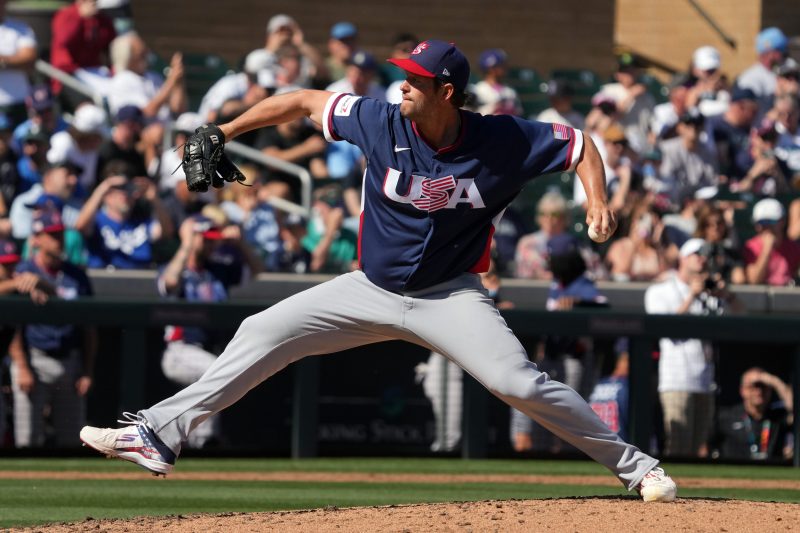
Clayton Kershaw, who could have stayed home in Dallas after retiring on top of the world with back-to-back World Series titles with the Los Angeles Dodgers, strolled to the mound Wednesday one last time in a spring-training game.

The moment the public address announcer at Salt River Fields called out his name as he walked to the mound, he received a thunderous standing ovation by the sellout crowd of 11,803.

“That was so cool, I had chills out there with the standing O they gave that man,’’ USA teammate and Yankees three-time MVP Aaron Judge said after the USA’s 14-4 victory against the Colorado Rockies. “The crowd went crazy for him out there pitching. Just to see him back out there and get a chance to share a clubhouse with a guy like that, and so respected around the game. He’s accomplished everything in his career.

“It was pretty special.’’

The results weren’t pretty. Kershaw gave up a home run on the third pitch he thew, walked a batter, threw a wild pitch, didn’t throw harder than 87.2 mph, and struggled with his control, throwing just six of his 13 pitches for strikes.

Yet, just wearing the red, white and blue, and considering his arm and body still felt perfectly fine in his first outing since Game 3 of the World Series, he was ecstatic.

“It was so cool,’’ Kershaw said. “I played against Colorado and Arizona a lot, so to hear that was special. … Just being on this team was a bucket list for me from the beginning, and so getting to do that, it was really cool.

“Obviously, I thought I was never going to throw a baseball again, so to get to do that with Team USA across your chest, and come back to that dugout, that team is really special.’’

Really, his USA teammates were more thrilled than Kershaw watching him in uniform for the final time before they open the World Baseball Classic on Friday against Brazil in Houston.

“It was awesome,’’ said Paul Goldschmidt, the seven-time All-Star and former MVP, who faced Kershaw 67 times in his career. “I’ve been looking forward to playing with this guy instead of against him my whole career.

“He’s had the most amazing career anyone could imagine. It’s just awesome that he’s coming back and doing this.’’

Said two-time Cy Young winner Tarik Skubal: “That was so awesome seeing that. … That’s a big reason why I wanted to be part of this, to be with teammates like Clayton Kershaw.’’

Kershaw, who considers himself the emergency pitcher for Team USA, said that if his outing Wednesday was the last time he steps on the mound, “it was worth it.’’

Sorry, but USA manager Mark DeRosa isn’t going to let him sail off into the sunset of his magnificent career with his last outing being against the Rockies in a meaningless spring-training setting. Kershaw will definitely pitch sometime in the tournament when they play four pool games in five days in Houston, DeRosa says, even if it’s just in a mop-role to eat innings.

Kershaw, 37, deserves a send-off that is fitting for one of the greatest left-handed pitchers in baseball history, and pitching in a WBC game will be the perfect ending.

“I wouldn’t put on a uniform,’’ Kershaw said, “for anything else.’’

Kershaw, who spent his entire 18-year career with the Dodgers, badly wanted to pitch in the 2023 WBC. Yet, the WBC insurance wouldn’t cover him with his array of injuries, forcing him to miss the tournament.

Now, with his family getting to see him pitch one last time in Houston, this could be the perfect farewell.

“I was pretty much mentally shut down,’’ Kershaw said. “(DeRosa) called and I thought about it for a minute, and I was like, ‘it’s not going to be fun to pick up a baseball again, but it’s worth it to be part of this group. …’

“It’s a great group. It’s been a lot of fun to get to know them.’’

And even as sensational as a Hollywood script it would be, Kershaw is already putting a stop to the idea he could be the one pitching the final out against former teammate Shohei Ohtani of Team Japan.

“I think for our country’s sake,’’ Kershaw said, “it’s probably better if I don’t.

“If they need me, I’ll be ready. It’s not going to be pretty, but I’ve got a lot of bullets. They just might not be quality bullets.’’

While Kershaw rules out any possibility of a future comeback after the WBC, he does have one more baseball stop before his career officially comes to an end.

He’ll be at Dodger Stadium on March 27.

He’s got a World Series ring to collect.

Follow Nightengale on X: @Bnightengale

This post appeared first on USA TODAY

The Dallas Stars won their ninth and 10th straight games when they beat the Vancouver Canucks and Calgary Flames 6-1 this week, setting a franchise record for most consecutive regular-season wins.

While it’s a streak coach Glen Gulutzan and his team will wear as a badge of honor, only four franchises have not won 10 straight: the 2-year-old Utah Mammoth, 5-year-old Seattle Kraken, Detroit Red Wings and Los Angeles Kings.

The Stars are reaching new heights, and they’re getting closer to the Colorado Avalanche for the top spot in the NHL standings as we approach Friday’s trade deadline. But they’ll need to keep winning through mid-March to get on this list of the longest winning streaks in NHL history:

Top 5 longest regular-season winning streaks in NHL history

5. Pittsburgh Penguins (15 games, 2012-13)

In 2013, the Pittsburgh Penguins enjoyed a perfect March, winning all 15 games. They had a somewhat favorable schedule, playing 10 of 15 at home, including a four-game stint to end the month. 

They allowed just 26 goals, an average of 1.73 per game, and had four team shutouts.

Sidney Crosby had 25 points (six goals, 19 assists), leading the league during the streak, and teammate Chris Kunitz was second, notching 20 points (11 goals, nine assists). 

4. New York Islanders (15 games, 1981-82)

The New York Islanders enjoyed a 15-game winning streak in 1981-82, culminating in their third successive Stanley Cup.

The Islanders went on to win a fourth straight Stanley Cup the next season, marking the last time any franchise won more than two in a row.

They scored 97 goals in 15 games, 24 more than a Montreal Canadiens team that had the second-most during the famous stretch. New York was also the best defensively, conceding 35 goals. 

3. Columbus Blue Jackets (16 games, 2016-17)

The Columbus Blue Jackets won eight straight at home and on the road from Nov. 29, 2016, to Jan. 3, 2017.

Sergei Bobrovsky started in 14 of those 16 games and had a sterling .941 save percentage and 1.64 goals-against average during the streak. Both were league bests, and the Blue Jackets allowed two goals or fewer 13 times.

Unfortunately, all was for nought as the Blue Jackets lost in the first round of the playoffs to the Pittsburgh Penguins. 

2. Edmonton Oilers (16 games, 2023-24)

After a woeful 5-12-1 start that cost Jay Woodcroft his job, the Oilers went on arguably the greatest run in NHL history, winning 24 of the following 27 games. 

That included an eight-game and a 16-game winning streak, the latter of which was bettered only by the 1992-93 Pittsburgh Penguins. 

The Oilers were almost impenetrable for large portions of the streak, allowing two goals or fewer in 14 straight. 

They eventually advanced to the Stanley Cup Final, losing in seven games to the Florida Panthers.

1. Pittsburgh Penguins (17 games, 1992-93)

The Penguins’ astonishing run set a record that has stood for 33 years.

We all know who spearheaded the unprecedented streak, with Mario Lemieux scoring an outrageous 27 goals and 51 points, an average of three per game.  

He finished the season with 69 goals and the Hart Trophy to boot. Tom Barrasso was between the pipes for 14 of those wins, and backup Ken Wregget took the helm for the other three.

This post appeared first on USA TODAY

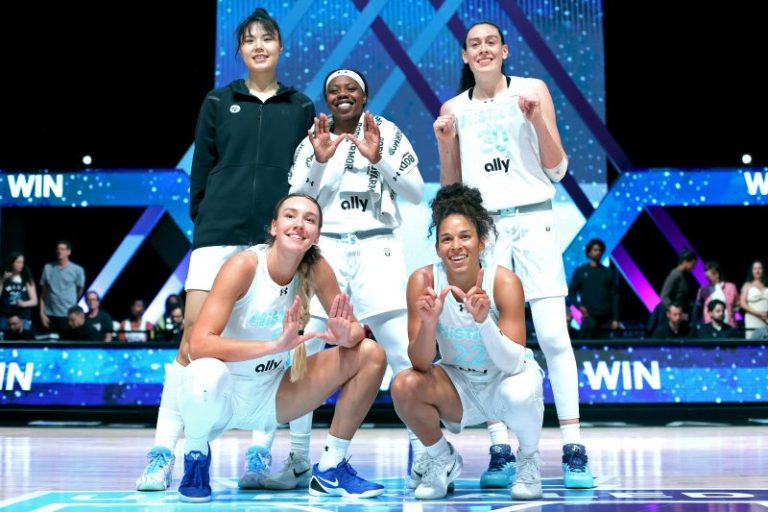
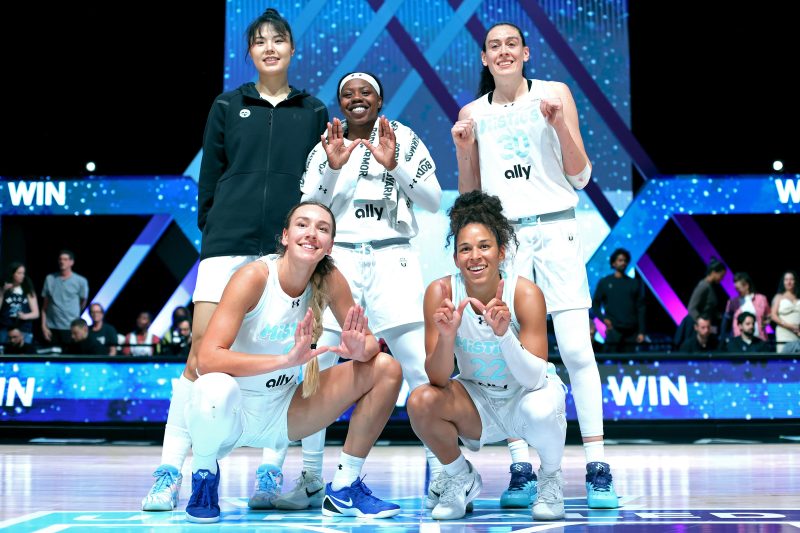
Breanna Stewart has won at every level of women’s basketball. Now she can add Unrivaled, the 3-on-3 women’s professional basketball league she helped start, to that list.

Stewart’s championship haul prior to Wednesday, March 4:

  • Two high school state titles
  • Four NCAA championships at UConn
  • Three WNBA titles with the Seattle Storm and New York Liberty
  • Three Olympic gold medals with Team USA

Now, she is also an Unrivaled champion after helping Mist BC defeat Phantom BC, 80-74, Wednesday night at Sephora Arena in Miami. It was the second season of the league Stewart helped co-found with former UConn teammate Napheesa Collier.

‘I pride myself on being a winner and continuing to kind of uplift and build a space for all players,’ Stewart said, ‘and that’s what I’m really excited about.’

The end of the title game was somewhat anticlimactic. Stewart was first charged with an offensive foul, but when the call was overturned, she shot free throws to seal the Mist victory. Stewart finished with an Unrivaled career-high 32 points. She also grabbed four rebounds, had two steals and two blocks. Arike Ogunbowale added 19 points off the bench and Allisha Gray 12 points for the Mist.

All six Mist players will earn $100,000 for the victory, up from the $50,000 every Rose BC player earned for last season’s championship.

Kelsey Plum scored 40 points on 14-for-21 shooting in a losing effort for Phantom BC, which entered the tournament as the No. 1 seed. Kiki Iriafen added 13 and Tiffany Hayes 12.

The Mist led by six points going to the fourth quarter, which in Unrivaled rules is untimed. The league adds 11 points to the score of whichever team is leading at the end of the third quarter and that is the target score. In this case, first team to 79 points won.

Stewart sealed it for the Mist at the free throw line, adding another championship to her legacy.

This post appeared first on USA TODAY

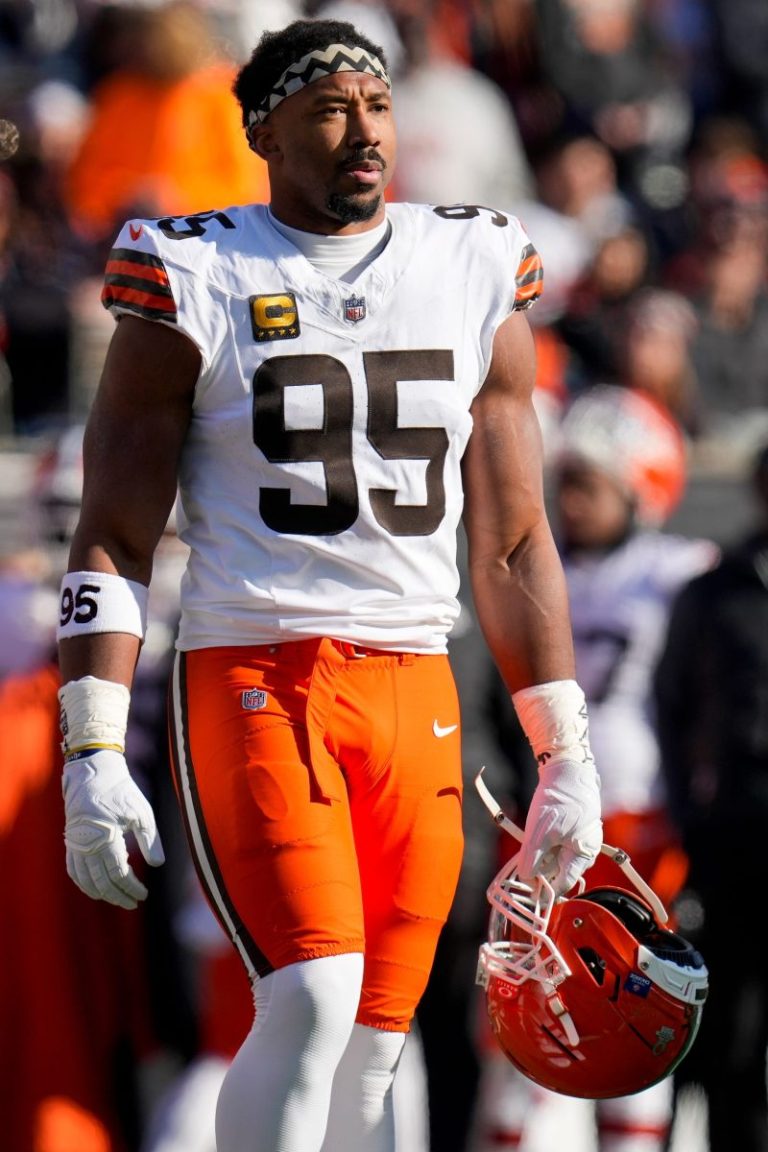
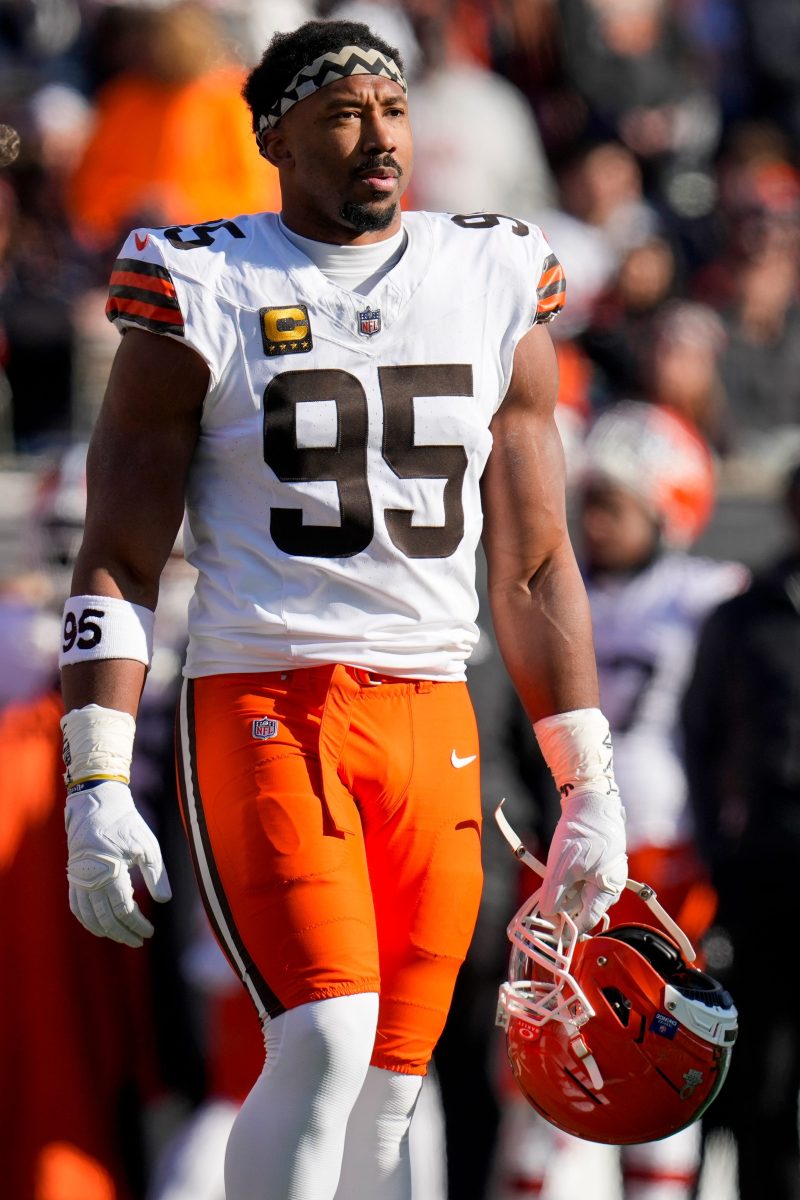
Cleveland Browns star Myles Garrett was cited for speeding in Wayne County, Ohio on Feb. 21 for driving 94 mph in a 70-mph zone on Interstate 71.

It marks the ninth speeding ticket for the 2025 NFL Defensive Player of the Year since being drafted No. 1 overall by the Browns in the 2017 NFL Draft.

Court records showed that the star pass-rusher was pulled over at 1:35 a.m. in Congress Township. He was driving a 2024 Green Porsche.

Garrett’s arraignment date is set for March 10 and was fined $157.50.

Speeding tickets aren’t a new thing for Garrett, who was previously cited for driving 100 mph in a 60 mph speed limit zone at around 2:01 a.m. ET on Saturday, Aug. 9 in Strongsville, Ohio. That incident came following a Browns’ preseason contest against the Carolina Panthers.

Garrett previously flipped his Porsche while speeding and swerving to avoid an animal in 2022.

The star inked a four-year, $160 million contract extension in March 2025, which made him the highest-paid non-quarterback in NFL history at the time.

This post appeared first on USA TODAY

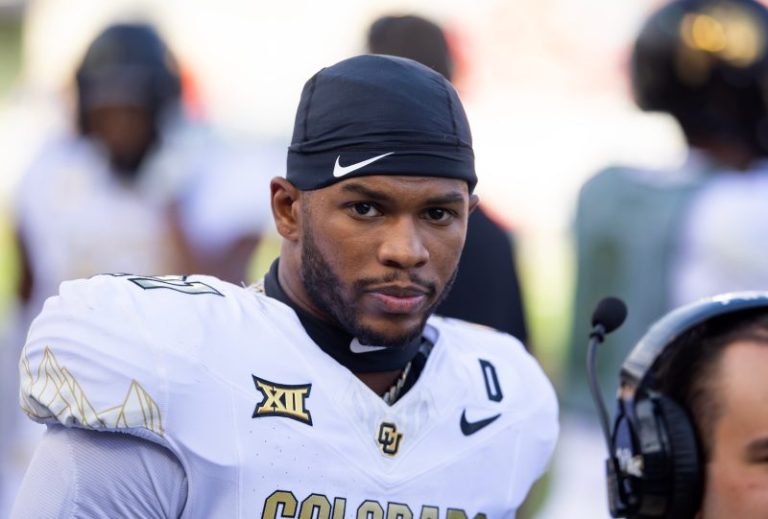
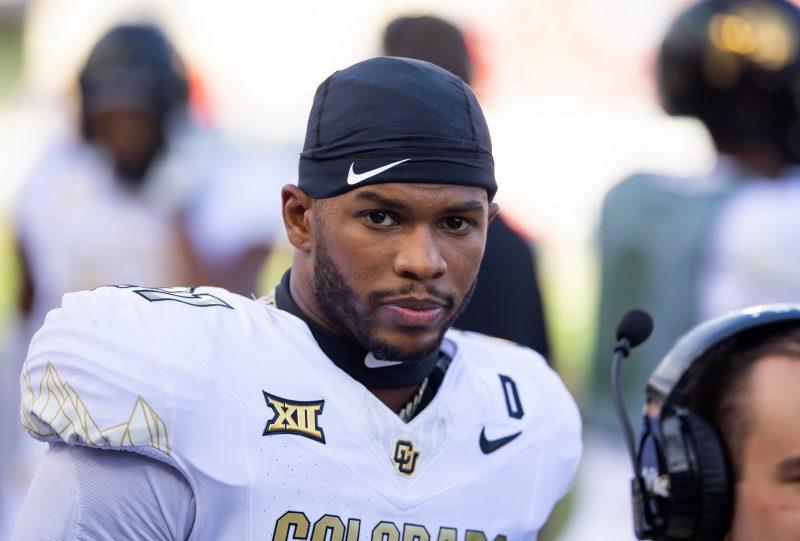
  • A judge denied Shilo Sanders’ request to dismiss a lawsuit from the trustee in Sanders’ bankruptcy case.
  • The trustee alleges Sanders made unauthorized transfers and seeks to recover NIL earnings for creditors.
  • Sanders filed for bankruptcy to discharge an $11.89 million debt stemming from an incident in 2015.

A federal bankruptcy judge has issued a ruling against former Colorado football player Shilo Sanders, denying a request by Sanders to dismiss a complaint against him from the trustee overseeing Sanders’ bankruptcy case.

The trustee had sued Sanders in October, two years after the son of Colorado coach Deion Sanders filed for bankruptcy in October 2023 in an effort to get out of more than $11 million in debt.

The trustee alleged Shilo Sanders had violated bankruptcy law by making unauthorized transfers of approximately $250,000. The suit sought to recover that money and more, which included Sanders’ college income from his name, image and likeness (NIL) through his businesses “Big 21” and “Headache Gang.”

In response, Sanders’ attorney said the trustee’s lawsuit was misguided and sought to have it dismissed. But Judge Michael Romero rejected Sanders’ arguments and is allowing the trustee’s lawsuit against Sanders to proceed toward a possible trial.

“The Court’s role in deciding the Motion to Dismiss is not to resolve factual disputes or weigh potential evidence outside the four corners of the Complaint,” Judge Michael Romero wrote in his ruling March 4. “The Trustee has otherwise sufficiently pled the necessary elements of his claims. He has also supported his claims with sufficient factual allegations regarding Sanders’ bank accounts, his NIL proceeds deposits into the Big 21 Account, and Sanders’ control over Big 21 and Headache Gang. Whether the evidence will ultimately substantiate the Trustee’s claims is a matter to be decided at trial.”

What is this case against Shilo Sanders about?

There are multiple parts to Sanders’ bankruptcy case, including this complaint from the trustee, David Wadsworth, who is tasked with rounding up Sanders’ non-exempt assets for the benefit of Sanders’ creditors.

This ruling is separate from another pivotal part of Sanders’ bankruptcy litigation that is set for trial Aug. 31 and does not involve the trustee.

The big issue in the trustee’s lawsuit against Sanders is to whom the money in question belongs — the bankruptcy estate or Sanders. Sanders’ earnings before he filed the bankruptcy petition generally belong to the bankruptcy estate for the benefit of creditors, while earnings that came from work after the filing belong to Sanders.

What did the judge’s ruling against Shilo Sanders mean?

Sanders’ attorney, Keri Riley, stated in court documents the money in question belonged to Sanders because they were “post-petition earnings.”

The trustee is disputing that and wants an accounting. The judge basically said this is a matter to be decided at a trial later, not in a motion to dismiss.

“Identifying the true nature of the funds will require presenting evidence and resolving numerous factual issues,” the judge ruled. “For example, whether the funds are Sanders’ pre- post-petition earnings will depend on the type of services Sanders performed, when he performed them, and the terms of the contract(s) (if any) requiring those services.”

Why did Shilo Sanders file for bankruptcy?

Shilo, 26, is the middle son of Deion Sanders. He didn’t go into debt because of unpaid loans or overspending on credit cards. He instead was hit with a civil court judgment in Dallas in 2022 that put him on the hook for $11.89 million, all owed to one man, John Darjean, a former security guard at his school in Dallas.

Darjean sued Sanders in 2016, alleging Sanders left him with permanent and severe injuries when he punched and elbowed him in head and neck area at school in 2015, when Shilo was 15. Sanders claimed it was self-defense but didn’t show up for the trial in 2022, which led to the default judgment against him.

Sanders filed for Chapter 7 bankruptcy in 2023 after Darjean moved to collect on that debt. Sanders’ goal is to get that debt discharged in bankruptcy court. But Darjean is fighting it and arguing the law doesn’t allow him to discharge it in this case because the debt stems from a “willful and malicious” injury.

That’s the issue in the trial set for Aug. 31. This separate trustee lawsuit has no trial date yet.

Shilo Sanders is currently out of football but has worked as an influencer and recently considered acting lessons after moving to Miami. He and his brother Shedeur Sanders also recently appeared as fashion models in Paris.

Follow reporter Brent Schrotenboer @Schrotenboer. Email: bschrotenb@usatoday.com

This post appeared first on USA TODAY

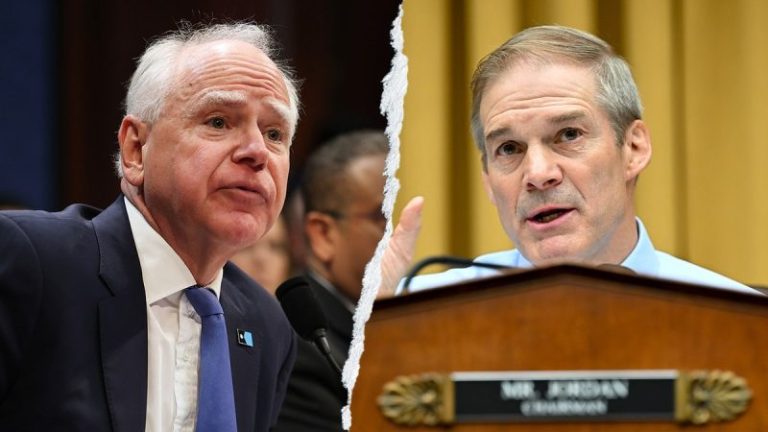
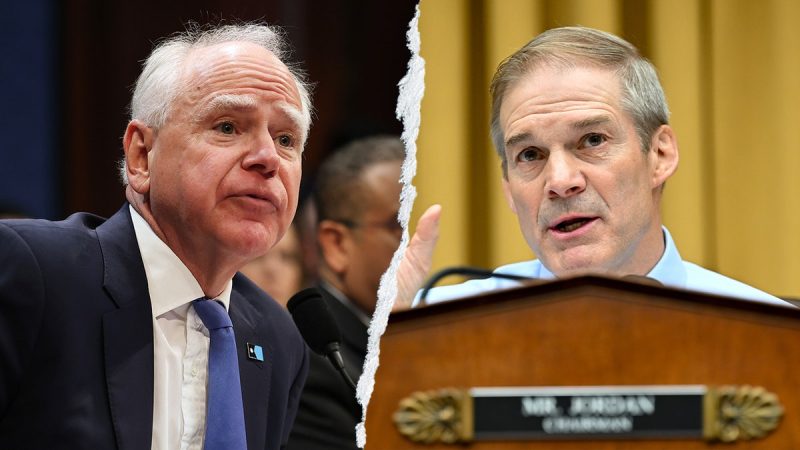
Minnesota Gov. Tim Walz and Attorney General Keith Ellison faced a barrage of tough questions from Republicans during a Wednesday House hearing on the massive fraud scandal in the state, with most of the questions focused on one key theme: What did they know, and when did they know it?

Walz and Ellison were asked multiple times for specifics regarding when they were first made aware of the fraud problems and faced sharp rebukes from Republican members, including Rep. Virginia Foxx.

‘You did not do your job, you did not do your job,’ Foxx told Walz. ‘You did not protect taxpayer dollars. You allowed massive fraud. You and Mr. Ellison allowed massive fraud to go on in the state of Minnesota. It is unfortunate, as somebody said, that you can’t be held personally responsible at this stage in the game.’

An exchange between GOP Rep. Jim Jordan and Walz sparked immediate pushback from conservatives on social media. 

‘Why didn’t you tell the truth about why you restarted the payments?’ Jordan asked during a House Oversight Committee hearing on Minnesota fraud on Wednesday.

The exchange centered on Walz’s past public statements that a judge ordered the Minnesota Department of Education to continue reimbursements in April 2021 after the agency had halted payments over fraud concerns.

Jordan pointed to a 2022 court-authorized news release from then-Ramsey County District Court Judge John H. Guthmann that disputed the governor’s characterization of the events.

‘So either you’re lying or the court’s lying. And I’m just asking you which one is it?’ Jordan said.

One of the most contentious exchanges came during questioning from GOP Rep. Nancy Mace when she pressed Walz for specific numbers on how many children are in his state, the massive increase in autism care spending and why that occurred without getting specific numbers back from Walz.

‘Ok, so your excuse before — that you didn’t know what the 2017 autism numbers were — because you were not governor, and today you can’t answer the numbers about 2024 as governor, and you still said you prepared for this hearing today. It’s unbelievable.’

Walz shot back that he wouldn’t be a ‘prop’ for Mace, and she eventually said, ‘I expect you to know this information. Thank God you’re not vice president of the United States.’

GOP Rep. Clay Higgins confronted Ellison in another heated moment asking him to say he was ‘leading’ the fight against rooting out corruption without getting the specific answer he was looking for, prompting him to call for Ellison’s resignation. 

‘I’m not talking about Medicaid fraud, don’t hide behind that,’ Higgins said, interrupting Ellison. ‘You have the authority to prosecute anything criminally that the governor asks you to, and this thing is big. I’m giving you an opportunity sir, are you leading the criminal investigative effort into this massive fraud across the board…or not?’ Higgins pressed.

‘We are following the law,’ Ellison said before Higgins cut him off again.

‘You are not leading, I’m going to say, Mr. Chairman, that the attorney general of the state of Minnesota should resign,’ Higgins said.

At the close of the hearing, things became tense again when GOP Rep. Nick Langworthy suggested that Walz, who is still serving as governor despite dropping out of his re-election bid due to the fraud scandal, should be impeached for ‘malfeasance,’ citing Minnesota’s own state Constitution. 

Fox News Digital’s Ashley Carnahan contributed to this report.

Related Article

Walz accused by Jordan of trying to ‘hide behind’ court order in Feeding Our Future payments
This post appeared first on FOX NEWS

Iran’s tyrannical and ruthless regime is disintegrating. After yet again massacring thousands of its own citizens for voicing their dreams for liberty and better governance, the Iranian regime meantime resumed pursuing nuclear capability and its aggressive ICBM program. The regime’s overconfidence in U.S. inaction cost it its leader and its core military capabilities are going up in smoke. Against this backdrop, the conflict has spread to the Gulf, threatening the Strait of Hormuz, a chokepoint for roughly one-fifth of the world’s petroleum, and forcing the rest of the world to rethink how it prices energy risk and political alignment.

This is not another regional flare-up. This is a rupture of an old equilibrium in which sanctioned oil, shadow fleets and calibrated escalation kept markets stable enough to function. That equilibrium is now breaking. A rapid political-military shift in the Middle East is unfolding alongside a restructuring of the global energy order.

When I was in Afghanistan during the surge, Tehran’s active support for the insurgency fighting the United States and Afghan forces fomented instability and amplified violence for which civilians paid the biggest price, a dynamic that so many across several nations have tragically encountered for decades. But Iran was never a contained regional problem.

While its terrorism was widely perceived as a Middle East issue, its cyber and intelligence operations spanned continents, with assassination plots that included the American president. As to global effects, Iran’s energy has always made its regime globally significant.

At this stage of the conflict, the most economically significant and immediate geography is the Strait of Hormuz which Iran is working to choke off. Roughly one-fifth of global petroleum and a substantial portion of liquefied natural gas move through that narrow corridor. As strikes intensified, vessels paused transit, insurers reassessed exposure and operators rerouted cargoes. Markets adjusted immediately. Energy security and geopolitical stability are now inseparable; maritime risk has become the pressure valve through which regional conflict spills into global consequence. 

This realignment did not begin in the Gulf this weekend. It started with U.S. actions in Venezuela. Caracas holds the world’s largest proven crude reserves — about 303 billion barrels — and even marginal normalization under a more U.S.-cooperative government alters the supply calculus for Washington and its allies.

The new U.S.–Venezuela arrangement has already generated roughly $2 billion in transactions in just weeks, pulling Venezuelan barrels back into wider circulation and altering the discount ecosystem Moscow had grown accustomed to. Stack that with a post-crisis Iran re-entering markets on different terms, and the shadow ecosystem of discounted, sanctioned crude — Russia, Iran, Venezuela — begins to fracture and reprice simultaneously.

But the most consequential energy recalibration runs through Beijing. China is essentially Iran’s oil export market. In 2025, China bought more than 80% of Iran’s shipped oil, averaging ~1.38 million barrels per day, about 13.4% of China’s seaborne crude imports—meaning Beijing is simultaneously Tehran’s economic lifeline and its strategic choke chain.

Oil tanker blazes near the coast of Oman in

By turning a sanctioned producer into a quasi-captive supply relationship — sustained through gray-market routing, reflagging and intermediary hubs — Beijing secured discounted barrels in normal times and leverage in crisis. Any sustained disruption of Iranian flows forces China into replacement buying that tightens global markets and exposes China’s own energy security; Iran exports about 1.6 million bpd mainly to China and such disruptions pushes Beijing to pivot to alternatives.

The relationship is therefore best understood as a dependency loop: Iran needs China for revenue and sanctions relief-by-proxy; China uses Iran as a discount supplier and as a pressure valve in the sanctioned crude system — one that can be tightened or loosened depending on Beijing’s broader negotiation posture with Washington and its appetite for risk in the Gulf. That Iran-China dependency is no longer stable.  With Iranian oil flows disrupted, China faces a choice between turning to alternative suppliers at higher cost or even tapping strategic reserves. Tightening global crude markets resulting from U.S. actions in Venezuela and now Iran give Washington leverage in energy pricing.

Beyond the tanker decks, this shift underscores the larger theme of reconfiguration: resources once bundled to manage sanctions are now subject to heightened geopolitical risk, forcing China to rethink dependencies while the U.S. and its partners are positioning to shape the post-conflict energy order. Energy supply patterns will restructure global power relations. And where China is recalibrating exposure, Russia is recalculating opportunity.

The same forces reshaping China’s calculations are altering Moscow’s. As India trims Russian purchases, Moscow has been pushing more barrels into China, and Reuters reports China’s Russian crude imports hitting new records in February while Russian sellers widened discounts to keep demand — Urals trading roughly $9–$11 below Brent for China deliveries, and other Russian grades also cutting hard as sellers chase Chinese refiners.

The new U.S.–Venezuela arrangement has already generated roughly $2 billion in transactions in just weeks, pulling Venezuelan barrels back into wider circulation and altering the discount ecosystem Moscow had grown accustomed to. 

This matters because China is also the anchor buyer for sanctioned Iranian crude; the ‘discount market’ is not infinite, so Russia and Iran are now competing for the same limited pool of Chinese buyers, driving deeper concessions and leaving cargoes idling — exactly the kind of sanctions-economy dynamic.

Add the West’s tightening focus on Russia’s ‘shadow fleet’ and the risk of seizures or insurance denial, and you get an energy chessboard where coercion moves from rhetoric to logistics: who can ship, insure and clear payments reliably becomes as strategic as who can produce.

In that context, Russia’s loud warnings about Hormuz disruption are not just diplomacy, they are a reminder that Moscow profits from volatility, but also needs a functioning gray-market channel to China, and Iran’s crisis threatens to scramble the very discount ecosystem Russia has used to finance its war in Ukraine. Structural realignment threatens the very gray-market architecture on which Moscow has relied.

Energy is only one layer of a global shift. Strategic minerals remain critical. The Trump administration has increased economic and maritime pressure on Cuba, tightening an effective oil blockade that choked off fuel imports. President Donald Trump has authorized tariffs targeting countries supplying oil to Havana.

WATCH: US forces board Veronica III crude oil tanker

This is not simply punitive policy. It reflects a broader strategic doctrine: deny adversarial regimes energy lifelines while repositioning the Western Hemisphere’s resource base toward U.S. leverage. Oil is only one domain. Rare earth elements are a strategic asset. Cuba’s nickel and cobalt output, combined with China’s tightening grip through rare-earth export controls indicates that leverage is not just oil fields but also supply chains. America achieving rare earth elements sovereignty will remain a strategic goal and such a global realignment on this front is much needed.

By the close of the first weekend, Iran appeared intent on accelerating its own collapse by compounding strategic error with strategic error. Iran felt it wise to respond to U.S. and Israeli strikes by pushing a half dozen other nations against it. On Saturday afternoon, Feb. 28, Iran launched attacks on seven sovereign nations – Bahrain, Saudi Arabia, UAE, Kuwait, Qatar, Jordan and Israel. It added Oman shortly after.

These nations now have a legal and political basis to deepen security ties with the U.S. and Israel that they could never have justified domestically before today. Iran has arguably done more to consolidate the anti-Iran regional architecture in one afternoon than a decade of American diplomacy. Watch for accelerated Abraham Accords-adjacent normalization with Saudi Arabia in the coming weeks.

Any sustained disruption of Iranian flows forces China into replacement buying that tightens global markets and exposes China’s own energy security…

After massacring thousands of its own citizens for demanding better governance, the regime’s long-standing presumption of U.S. inaction cost the 1979 Revolution its dream of ruling over Iranians perpetually. After 47 years, its leader is gone, and its core military capabilities are being dismantled.

The lesson is not simply that the Iranian regime is falling. It is that when it falls amid energy chokepoints and great-power competition, supply chains, alliances and leverage structures shift simultaneously. Iran’s collapse is not the end of the story; it is the catalyst for a broader redistribution of power across energy, alliances, and great-power leverage. America should exploit these shifting dynamics fully. 

The views expressed here are his and do not reflect the policy or positions of the Department of Homeland Security, Homeland Security Advisory Council, U.S. Army or Department of Defense. 

Related Article

Gas prices could jump as Middle East tensions threaten global oil supply
This post appeared first on FOX NEWS