Author

admin

Browsing

89356066007-2268557704.jpg

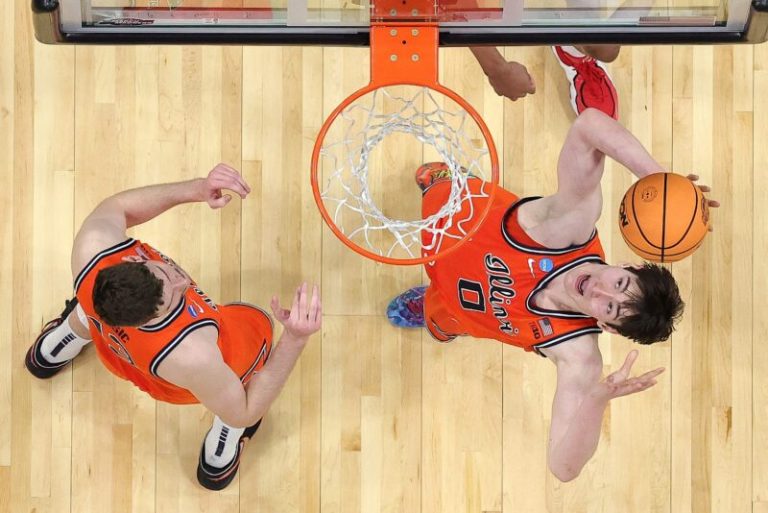
HOUSTON — Rebounding has always come naturally to David Mirkovic. Before he committed to play college basketball at Illinois, the 6-foot-9 forward from Montenegro played two seasons of professional basketball in the Adriatic Basketball Association League, where he averaged 6.4 rebounds per game during the 2024-25 season.

When the ball bounced off the rim or backboard, Mirkovic corralled it, simple as that.

That changed when he got to Illinois last summer.

“It’s much different,” Mirkovic said. “(In Montenegro), I didn’t have coaches that tell me and remind me every day all day to crash the boards or get some of the defensive rebounds. But since I’m playing basketball, every time I was the best rebounder on my team. I would say just naturally, I had that feel for rebounds. So when that combines with the coach that’s put that much emphasis on rebounding, it’s just getting better.”  

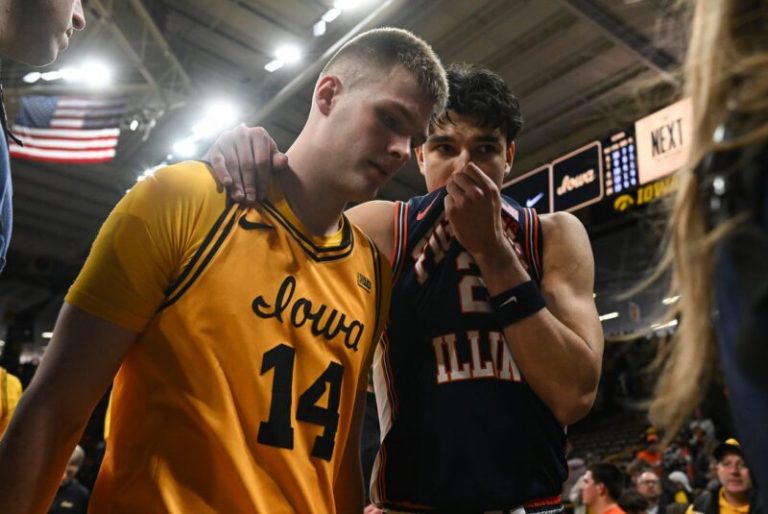
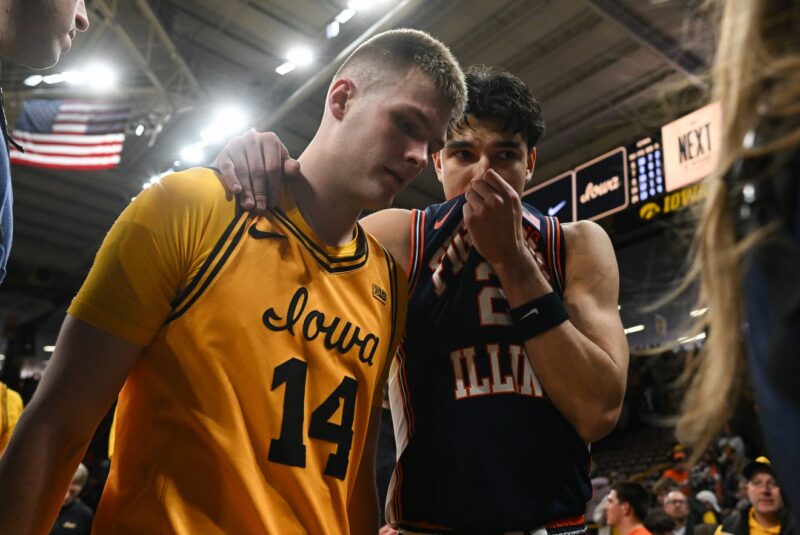
Mirkovic is now the top rebounder on an Illinois team that is riding a rebounding wave into Saturday’s NCAA Tournament Elite Eight game against Iowa.

This season, the Illini are ranked 10th in rebounds per game (41.1) and seventh in rebounding margin (10.1). It’s not a new strength; Illinois has been a top-10 rebounding team in the country in each of the last three seasons.

“I think the secret sauce is just, it’s something you emphasize every single day,” said Illinois assistant coach Tyler Underwood.

Underwood’s father, Illinois head coach Brad Underwood, was Kansas State’s director of operations during the 2006-07 season under head coach Bob Huggins, who is famous for his aggressive rebounding schemes. That left an imprint on Underwood, and in nine seasons at Illinois he’s made rebounding a pillar of his program.

The Illini track individual players’ “go rates” – what percentage of the time they crash the offensive glass – in practices and games. At halftime, coaches check “go rates” and remind players who are falling short to fulfill their offensive rebounding obligations. The message is clear: If you don’t go, your playing time stops.

The Illini are receiving key contributions on the boards from a pair of freshmen, Mirkovic and guard Keaton Wagler.

Through three NCAA Tournament games, Mirkovic is averaging a team-high 10.7 rebounds to go with 13.7 points. Wagler, the team’s top scorer averaging 17.7 points, is right behind him averaging 8.0 rebounds.

In the Illini’s Sweet 16 win over Houston, Mirkovic broke the Illinois freshman total rebounding record set by Kofi Cockburn six seasons ago, while Wagler pulled down a career-best 12 rebounds. They became the first pair of freshman teammates to each have a double-double in the same NCAA Tournament game since freshmen became fully eligible in 1972-73. 

“His frame doesn’t scream 12 rebounds, but his toughness does,” Houston coach Kelvin Sampson said of Wagler.

Prior to Thursday’s game, Brad Underwood told Illini players that they would need a massive effort on the glass to win, especially from the guards. Wagler answered the call.

“He’s a great listener,” Brad Underwood said. “We knew that (Chris) Cenac and (Joseph) Tugler, they back tap a lot of balls. They’re elite at it. So our bigs were going to have to hit bodies, but our guards were going to have to come clean it up. So we needed a big, big rebounding game from our guards. I thought Keaton just takes everything to heart. He’s had some big rebounding games this year, but to do this in this moment – you guys got to understand what a joy it is to coach him, and he doesn’t worry about needing to score points.”

While Illinois’ bigs engage in physical battles under the basket to grab rebounds off the rim and box out their defenders, Wagler and the other guards stay alert and track down longer rebounds.

Tyler Underwood said that the Illini chart their misses and find that most occur on shots from the left corner of the court. When they miss from the left, the ball tends to carom to the right side of the basket, so Illinois tells players to flood “opposite and inside” to be in prime rebounding position.

Illinois typically has four players crash the boards after shots on offensive possessions, but last season the team slightly altered its rebounding philosophy. Instead of either the point guard or the shooting guard always being the player responsible for getting back on defense after a shot, the Illini decided that on 3-point shots, the shooter is the one who gets back – regardless of what position he plays.

That nuance has helped Illinois take advantage of their “twin towers,” brothers Tomislav and Zvonimir Ivisic, two 7-footers who each attempt more than half of their shots behind the 3-point line.

“With our pick-and-pop bigs, they end up shooting a lot of 3s, so that draws opponents’ bigs away from the rim, which puts them in uncomfortable sports, which allows guards to rebound,” Tyler Underwood said. “And our bigs end up being back in transition a lot, which is good because they’re our 7-footers.”

The strategy only works if players like Mirkovic and Wagler pick up the slack on the boards.

“I think rebounding, there’s an element of feel to it, an element of timing, an element of tracking the ball while it’s in the air,” Tyler Underwood said. “Both of those guys excel in that area because they have such a good feel for the game. And then they’re very disciplined and they put their teammates first. They’re willing to make winning plays.”

Both freshmen are do-it-all players who have developed a close relationship with each other on and off the court.

On the surface, the idea of a 6-foot-9 former professional player from Montenegro forming a bond with a skinny guard from Shawnee, Kansas, calls to mind videos of unlikely animal friendships. But the pair’s chemistry has blossomed through a mutual appreciation for hard work and competition, be it playing the “NBA 2K” video game or working out on the court.

“We have some similarities in our personality, like we are both Gen Z, I would say,” Mirkovic said. “The second thing, we had a lot of similarities, basketball-wise. Like we are pretty similar players despite different positions. … I would say our understanding and IQ of basketball and our unselfishness and skill level, that makes us unstoppable.”

Wagler said, “My first impression of him is that he’s a goofy guy who likes to mess around, but then in practices, he’s super competitive. He hates losing drills, no matter what it is. I knew we were gonna get along after that because I’m competitive. I don’t like to lose.”  

They’ve both learned to embrace the Illini’s rebounding ethos, too. Wagler said he and Mirkovic have gained confidence from watching each other succeed.

“I think we both learned that you don’t have to be the most athletic or fastest person on the court,” Wagler said. “You can play at your own pace and still be as good as anyone. We both do the right things and we both want to win. Doesn’t matter if we score however many points, you know – if we got to go in and pass, get assists, get rebounds, we’ll do that.”  
89355631007-bookcover.jpgwidth300height480fitcropformatpjpgautowebp

When the ball goes up, time stops.

As the dreaded popup rises in a youth baseball game, coaches on the bench and parents in the bleachers tense as the world turns into a slow-motion movie reel.

Who’s gonna get it?

Even big leaguers sometimes hate popups. Just before Carl Yastrzemski hit the one that would end Boston’s American League East pursuit in a famous winner-take-all playoff game in 1978, Graig Nettles, the Yankees’ third baseman, said to himself: “Don’t hit a popup to me.”

But Nettles, one of the best fielding third baseman of all time, camped under it and caught it. Overcoming popups are essential to success in baseball and in reality away from the field.

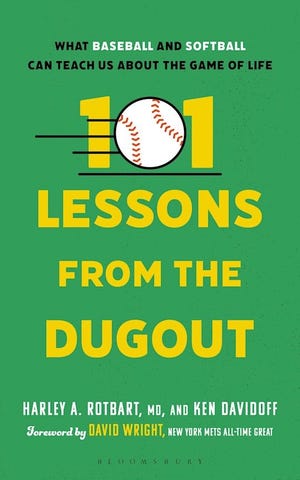
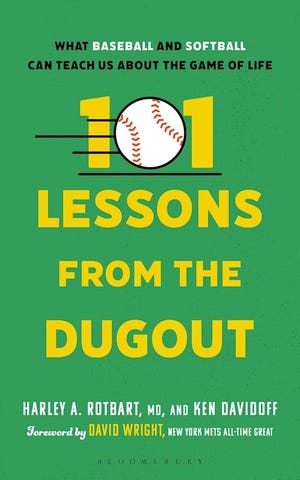
That’s the concept authors Ken Davidoff and Harley Rotbart have grasped in their new book, “101 Lessons from the Dugout: What Baseball and Softball Can Teach Us About the Game of Life.”

I would argue most parents don’t often think about these lessons when we watch our kids play. We want them to succeed from the earliest ages.

“Considering the pyramid of ascension in baseball, kids are not gonna be playing major league ball, and many of the kids are not gonna be playing college ball,” says Rotbart, a pediatrician and parenting author who coached his two now-grown sons at baseball, tells USA TODAY Sports. “And if they do it, it will be club ball. So I think that parents have fantasies about their child, if he doesn’t make that catch, if he doesn’t get the hit with the bases loaded, nobody is gonna sign him.

“He’s not going to be drafted anyway.”

While chasing the long odds, have you ever thought about how baseball and softball imitate finding success in life? Rotbart and Davidoff, a veteran sportswriter, have teamed to explore that question.  

We spoke with them and picked out 10 tips for parents about how they can apply lessons from baseball for sports and life success.

1. Step into the box: Being comfortable and confident is being successful

The book is about 15 years in the making, after Rotbart coached his two sons (now 34 and 38) through high school, taking meticulous notes that became a manuscript. He connected with Davidoff, who covered Major League Baseball for 30 years for a few New York City-area papers to bring it more legitimacy, to connect it more to the big leagues.

Rotbart was exercising the lesson in Chapter 9 (“The Batter’s Box”) and finding his comfort zone. In this instance, Davidoff tied the familiar moment to Hall of Famer Derek Jeter, who liked to chat with fans in the on-deck circle, which made him feel at home as he calmly walked to the plate.

When he stepped into the box, it was his time to be confident in his preparation, focus in and take charge.

“You are the right person, at the right time,” the authors write in the book. “Believe you can face any challenge, any time, and want to face that challenge. You are in the in the batter’s box, right where you belong.

When you step into the box and aren’t successful, though, a matter of inches – up or back, inside or out – can help you get on track.

“You can change your faith oftentimes without making dramatic changes in your life, but even making incremental changes,” Rotbart says.

2. Remember to tag up: Pause and control your anger

Now you’ve made it to one of the bases. If the batter hits a fly ball that is caught, you can’t advance to another without “tagging up.” When the ball leaves the bat, though, your impulse is to run.

But that little pause – that tag up – prevents us from harm and embarrassment. Outside the field, it’s a form of anger management.

How many times have you received an email or text from someone that enrages you? If you respond right away, your reply might be nasty. But if you pause and take a break, your action is more measured and thoughtful.

“There’s so much impulsivity in young athletes,” Rotbart says. “They see it in role models. They watch it on TV, the impulsive reaction to umpires, to coaches, to fans. And we have to teach kids to tag up.”

3. Life is a fielder’s choice: Decide what is most important

We are told as baseball players to think about what we’re going to do with the ball if it’s hit to us in the field. If runners are on base, we must make a choice.

If our team has a big lead in the game, we get the easiest force play. But if it’s a close game, we might throw across the diamond to third base to get the lead runner.

“It’s urgent for you to protect that slim lead and then you translate that over to school,” Davidoff says. “Let’s say you’re acing chemistry, you’re up four runs in chemistry. So, OK, you have homework in five subjects tonight, don’t worry about (chemistry) too much. But now you’ve got a “C” in chemistry, you’re only up one run. You need to get that lead runner. You need to turn the double play. You need to really step on the gas with your chemistry and make sure you nail it.”

4. Include everyone: Pinch-hitters and pinch-runners are crucial to the team

We can learn to throw ourselves into whatever role we are given.

“There are players who are not starters, and there are players who may not even be position players by their talent level,” Rotbart says. “But they have other skills that they can bring. They may be a fast runner. They may be able to hit, but not be able to field. And pinch-hitters and pinch-runners teach kids that we should be inclusive and not clickish, that we should want everyone on a team, everyone in our friendship circle, everyone in our class, to be included in activities, because everyone has something different to contribute.”

Even if you’re assigned a less prominent or less prestigious assignment on the team, or on the student council, or at the school newspaper, or in a Woody Allen movie with one line, make the best of it:

Go out there and make the catch that nobody expects you to make.

“When the expectations are low, that’s when you have the best opportunity to shine,” Rotbart says.

5. If you get yourself into a pickle, you can give yourself up for the greater good

I had a player on one of my Little League teams who was fast and could keep himself caught in a “pickle” between first and second bases long enough for a runner from third base to break for home and score.

The longer a pickle in baseball lasts, the more humorous it gets, and we wonder if the runner who made the “mistake” will still reach a base safely.

“Sometimes it works out, sometimes it doesn’t work out, but the analogy in the book is that when you are untruthful, when you say things that are not true, you get yourself in a pickle, and that’s when you’re lying, and you lose trust,” Rotbart says. “Sometimes you get away with it. Sometimes you advance to the next base. But oftentimes, you get thrown out, and being untruthful, lying is the most common cause for (a) real-life pickle.”

The lesson I like about the pickle is sacrificing yourself. As we know, even with two outs, that run from third base counts if it scores before the player is tagged out.

6. Mound meetings work: Take time to accept advice, or to just catch your breath

Davidoff remembers covering the Yankees’ first interleague visit to play the Colorado Rockies in 2002, and Roger Clemens was having a rough first inning.

He watched third baseman Robin Ventura walk over and chat with Clemens for a few seconds. Davidoff asked Ventura the next day what he had said to the starting pitcher.

“Nothing,” the third baseman told him, “just an excuse to let him exhale and take a deep breath.”

We all need it. Clemens got out of the first inning allowing only one run.

The same concept can apply when you call a timeout as a youth coach or gather your young player on the mound. They often respond by playing better. Sometimes, it’s as simple as you telling them, “I believe in you.”

7. Clean up your messes, and take pride in your spaces

Yoshinobu Yamamoto came to the Los Angeles Dodgers for $325 million in 2023. We know he helped lead Los Angeles to the World Series the last two seasons.

But did you know last October, after he pitched a complete game to even the World Series 1-1 in Toronto, he remained in the dugout and cleaned up trash teammates had left behind?

“Do not leave today’s mess for tomorrow,” Rotbart said. “You clean up the dugout, you sweep the field, just like Yoshi Yamamoto did. That’s protecting your tomorrow by taking care of your mess today.”

Someone may be playing on the field after you, or an opponent may have hosted you at their home park. You are showing them respect – win or lose – but also showing everyone a piece of who you are.

“Your personal spaces are part of you, signs on the outside of who you are on the inside, like the clothes you wear and how you brush your hair,” the authors write.

8. Stretch for the ball, but know when to pull off the base

Sometimes we want to make a spectacular play by diving for a ball in the outfield, or stretching far in front of us to catch a ball if we’re playing first base.

But what happens if we can’t get to the ball? We miss it, and it rolls to the outfield wall, allowing three runners to score. We don’t reach it and it skips past us at first base and the baserunner to get to second base in a tie game.

Sometimes, we need to slow up and let the ball drop to prevent further damage, or take our foot off the bag to stop the ball from going to the fence. Rotbart has used such analogies when speaking to patients as a pediatrician.

“A clinical example that I have (is) where a parent and an adolescent came into the clinic, and the mom was complaining that her son was doing too much of what his friends, what his cohort was asking him to do,” he says, “and that he would do anything to maintain friendship but he was going too far, doing things he shouldn’t be doing.”

9. Believe in yourself, and don’t listen to the chatter

I hear it every time my sons play a high school game. Teams are yelling at each other from the dugout, or fans are yelling from the stands, to try and throw players off their games.

It’s not easy to block out the noise.

“There will always be those who feel better when they’re embarrassing others,” Davidoff and Rotbart write. “In baseball, the best teams and the best players don’t taunt.”

The authors analogize chatter in the book to be like gossip: Saying things that are potentially hurtful, disruptive and distracting or even dangerous (in the case of fly balls).

Chatter might seem helpful in the moment but if a potential coach sees you doing it – in person or on social media – he or she might stop recruiting you.

10. Learn to catch the popup: Take charge and follow through

When the ball is up in the air, we’re waiting for someone on the field to take charge. Maybe it’s the kid who’s under it, but often it’s the one who’s most confident in catching it. Go ahead, call for it.

“Someone has to take responsibility,” Rotbart says. “Someone has to be accountable, and suddenly, the pop fly became a lesson in taking responsibility, following through.”

He thought about it, after watching some of the 700 to 800 kids who came through his baseball program crash into each other on the pitcher’s mound going after a popup. Rotbart reached for his notebook, and the seed of a book was born.

“Double-check everything you do with others to make sure you know who is doing what,” he and Davidoff would craft into lesson No. 48. “If you’re the one ‘calling’ for the ball, make sure others hear you; if someone else is calling for it, make sure you hear them. Messages you send can get lost and so can messages people send to you.

“When it’s important your message – or assignment or project – gets where it’s going and gets seen or heard, follow through and make sure it got there. Otherwise, you’ve dropped the ball.”

Borelli, aka Coach Steve, has been an editor and writer with USA TODAY since 1999. He spent 10 years coaching his two sons’ baseball and basketball teams. He and his wife, Colleen, are now sports parents for two high schoolers. His Coach Steve column is posted weekly. For his past columns, click here.

Got a question for Coach Steve you want answered in a column? Email him at sborelli@usatoday.com

89361504007-usatsi-27985085.jpgwidth1320height882fitcropformatpjpgautowebp

Iowa is known for its Field of Dreams. This Hawkeyes’ improbable run to the Elite Eight is what dreams are made of.

“Every time someone asks how you’re feeling, like, ‘Man, it’s just super crazy,’” Iowa junior Cam Manyawu said. “To really think, ‘Yeah, I’m in the Elite Eight, and I have a chance to really make it to the Final Four and go on a run.’ I mean, this is literally the stuff that kids dream about.”

This is the Hawkeyes’ first trip to the Elite Eight since 1987. “Walk Like An Egyptian” was the top song and gas cost $0.96 a gallon.

And Ben McCollum was 6 years old.

Iowa’s coach has proven to be a March wizard. He won four Division II national titles at Northwest Missouri State, sprung a first round upset in his lone year at Drake, and now in Year 1 in Iowa City has the Hawkeyes on the cusp of their first Final Four since 1980.

The Illini are back in the Elite Eight for the second time in three years and have been among the most impressive teams in this NCAA Tournament. Illinois’ wins have been comprehensive. It beat Penn by 25 in the first round, VCU by 21 in the second round and beat Houston — in a home game for the Cougars — by 10 in the Sweet 16.

The winner of today’s game advances to next week’s Final Four in Indianapolis. Here’s what you need to know about the matchup:

HIT FRESH FOR UPDATES.

Iowa vs Illinois live score

What time is Iowa vs Illinois in Elite 8?

  • Time: 6:09 p.m. ET, Saturday, March 28.

What channel is Iowa vs Illinois ? How to watch, streaming info

  • The game is airing on TBS/truTV, streaming via Sling TV.

Iowa vs Illinois prediction, odds

Tyler Tachman, Des Moines Register: Illinois 73, Iowa 64

Once the Hawkeyes took down Florida in the Round of 32, the path to the Elite Eight was pretty clear and not a far-fetched idea. But the path to the Final Four is a whole heck of a lot different with Illinois in the way.

The Illini took down the Hawkeyes, 75-69, back in January, and the game honestly wasn’t as close as the score indicated. In the second half of that game, the Hawkeyes only had an 18.3% chance to win at their best moment, according to ESPN. Iowa did not lead for a single second in that meeting. With a trip to the Final Four on the line, Illinois won’t be letting up either.

Adam Duvall, Peoria Journal Star: Illinois 68, Iowa 62

Look for Illinois guard Andrej Stojakovic to once again be a big factor off the bench. His offensive output in the last three tourney games as resulted in 14.3 points per game. But the Illinois defense stepped up big time, holding Houston to its lowest point total since 2024. Now, the Hawkeyes will try to dictate the tempo and play at its own pace. Iowa has won its three tournament games all by single digits and a combined 13 points. First-year coach Ben McCollum looks to put Iowa into the Final Four for the first time since 1980.

  • John Leuzzi: Iowa
  • Jordan Mendoza: Illinois
  • Ehsan Kassim: Illinois
  • Austin Curtright: Illinois
  • Moneyline: Illinois (-300), Iowa (+240)
  • Spread: Illinois (-6.5)
  • Over/under total: 137.5

Illinois will advance to Final Four if…

  • John Leuzzi: It replicates what it did defensively against Houston.
  • Jordan Mendoza: It controls the interior.
  • Ehsan Kassim: Wagler can win the matchup against Stirtz.
  • Austin Curtright: If its defense plays like it did against Houston.

Iowa will advance to Final Four if…

  • John Leuzzi: It limits Illinois on offensive rebounds, and second chance opportunities.
  • Jordan Mendoza: it’s knocking down 3-pointers.
  • Ehsan Kassim: Hawkeyes can make the game slower paced and Illinois misses shots.
  • Austin Curtright: Its bench contributors of Alvaro Folgueiras, Tate Sage and others continue their strong play.

What happened when Illinois, Iowa played in regular season?

Iowa and Illinois played just once this season, a top-20 matchup on Jan. 11 in Iowa City. Illinois led by 11 at halftime, but the Hawkeyes made a push before an eventual 75-69 Illinois win.

“I think Iowa’s a team that’s not going to go away,” Illinois freshman Keaton Wagler said. “When we played ’em, we got up early on them, and then we let them back in the game. We can’t get lackadaisical on that side of the ball on defense, just stick to our process throughout the whole game.”

Wagler led the Illini with 19 points, while Bennett Stirtz struggled, going 5-of-17 from the field.

Is Andrej Stojakovic related to Peja Stojakovic?

Yes, Peja is his dad. Peja Stojakovic played 13 seasons in the NBA, primarily for the Sacramento Kings, and was a three-time All-Star.

Andrej played at Cal and Stanford before transferring to Illinois.

When was last time Iowa was in Final Four? How many times has Iowa been to Final Four?

Iowa has been to three Final Fours. Their last appearance in the Final Four is in 1980 under Lute Olsen. The Hawkeyes have never won a national championship.

When was last time Illinois was in Final Four? How many times has Illinois been to Final Four?

The Illini have been to the Final Four times. Their last appearance was in 2005 under Bruce Weber. Illinois has never won a national championship.

How many Europeans are on Illinois’ team? Why does Illinois have so many Europeans on its roster?

  • David Mirkovic is from Montenegro
  • Andrej Stojakovic lists Thessaloniki, Greece as his hometown
  • Tomislav Ivisic is from Croatia
  • Zvonimir Ivisic is from Croatia
  • Mihailo Petrovic is from Serbia
  • Toni Bilic is from Croatia

“Geoff Alexander, Orlando Antigua deserve most all of the credit in terms of building the relationships in Europe,” Illinois coach Brad Underwood said. “It’s taken years. NIL has obviously helped enhance our abilities to attract some of the best players in Europe. But they’re a great fit for us. It’s not for everybody. I enjoy coaching ’em. They fit our university. We’re a diverse university with a lot of international students, so it’s a perfect fit for them.

“Basketball-wise it’s a great fit for me, and I like coaching them. The way we’re playing with positional size and shooting, it’s just — it’s a great marriage and a great fit. So we’ll continue it. I would think others will continue to migrate over there and keep trying to recruit those guys.”

Bennett Stirtz followed Ben McCollum from Northwest Missouri State to Drake to Iowa

The Hawkeyes’ leading scorer Bennett Stirtz (19.7 ppg) has followed Ben McCollum from Northwest Missouri State to Drake, transferred from Drake to Iowa, following McCollum again. The two were key to the Bulldogs’ first-round upset of Missouri in the 2025 NCAA Tournament.

“Yeah, the amount of trust I have in him, and that he never lies to anyone on this team, including me. He shoots it straight,” Stirtz said on his relationship with McCollum. “Even when it’s tough and even when it’s hard. He pushes you past your limit and I think that’s where the trust comes in and he cares about you a lot and wants to make you a better person. So, yeah, he just pushes everyone on this team and honestly you can see the benefit from that and even in the wins that he’s all had throughout his career, he doesn’t get complacent. So that’s what we need to do and continue to do is even though we beat a 1 seed, we can’t get complacent, we got to keep getting better every day and get ready for the game tomorrow.”

Why does Alvaro Folgueiras point to sky after 3-pointers?

Folgueiras points up at the sky after every 3-pointer he makes in honor of his dad, who died when he was 9 years old. He pointed at the sky after hitting his eventual game-winner against Florida, although he waited for the Gators’ timeout after running back on defense.

Folgueiras expressed what his family means to him after the game, and mentioned his mom being a rock throughout his childhood without his dad.

“He left us with my mom and my brother in my house,” he said. “It was kind of hard. We didn’t really feel it as much because my mom always made sure that we didn’t need anything, absolutely nothing. So, I cannot say that I grew up in an environment where I needed some things. No, that’s not the truth.

“Sometimes I can say that because I feel his absence. I was just going in the court and playing to get away of my house to be with something else. But I can say that I had a happy childhood. Something that we all said, and everyone has these kinds of things on their life.

“It’s that we are not victims. I never let things like that make me a victim. Not to me and not to my brother, not to my mom. We are like that because my mom was showing out every single day. Yeah.”

Keaton Wagler 2026 NBA Draft mock draft prediction

Atlanta Hawks, pick No. 7.

Kalbrosky’s Analysis:

After trading away Trae Young, the Hawks could find their point guard of the future in Illinois standout Keaton Wagler using a first-round pick they received from the Pelicans. The 19-year-old guard scored 46 points while shooting 9-of-11 on 3-pointers against No. 12 Purdue on Jan. 24. He projects as one of the best 3-point shooters in this class, shooting 41.0 percent from beyond the arc as a freshman this year. The Big Ten Rookie of the Year is a cerebral basketball player who is also averaging 4.9 rebounds and 4.3 assists per game this season.

∎ Read more about Keaton Wagler’s rise from unknown for freshman superstar.

Keaton Wagler stats

(all stats as of March 15)

  • 17.9 points per game
  • 4.8 rebounds per game
  • 4.4 assists per game
  • 44.6% field goal percentage
  • 40.2% three-point field goal percentage

260326-John-Wayne-Airport-Santa-Ana-ew-617p-b444ef.jpg

Federal authorities are investigating a close call this week involving a military helicopter and a United Airlines plane approaching John Wayne Airport in Santa Ana.

United Airlines Flight 589 was approaching the airport in Orange County around 8:40 p.m. Tuesday when a Sikorsky Black Hawk helicopter crossed its path, according to the Federal Aviation Administration.

Pilots on the United Airlines plane were advised by air traffic control to watch for the military helicopter flying near the airport, United Airlines said.

“They saw the helicopter, and also received a traffic alert, which they responded to by leveling the aircraft,” United said.

The United flight with 162 passengers and six crew members landed safely.

The new investigation comes a week after the FAA issued a new airport safety order designed to improve safety near airports where helicopters cross both arrival and departure paths. The order suspends use of visual separation between airplanes and helicopters and requires air traffic controllers to use radar to manage lateral and vertical separation between aircraft.

A close call earlier this month between a twin-engine Beechcraft 99 and helicopter at Hollywood Burbank Airport was cited by federal authorities as a key factor behind a new airport safety measure.

In another example, the agency said American Airlines Flight 1657 was cleared to land at San Antonio International Airport when a police helicopter was on its final approach path. The helicopter turned to avoid the American Airlines plane, the FAA said.

The new requirement applies to more than 150 of the nation’s busiest airports and extends a restriction already in place at Ronald Reagan Washington National Airport.

The upgraded safety measure was rolled out after a year-long FAA safety team review. In a news release, the FAA also referenced the Jan. 29 American Airlines jet and Army Black Hawk crash that killed 67 people. A key factor in the crash was the placement of a helicopter route in the approach path of Reagan National Airport’s secondary runway, the NTSB board said, also identifying air traffic controllers’ over reliance on asking helicopter pilots to avoid other aircraft as a factor.

89353308007-usatsi-27758185.jpgwidth1320height954fitcropformatpjpgautowebp

  • The author argues that college sports are a public trust, not privately owned by schools or conferences.
  • The author calls on Congress to pass legislation to stabilize the system for the benefit of all schools and athletes.
  • Proposed solutions aim to preserve college sports by allowing for collective media rights and new revenue streams.

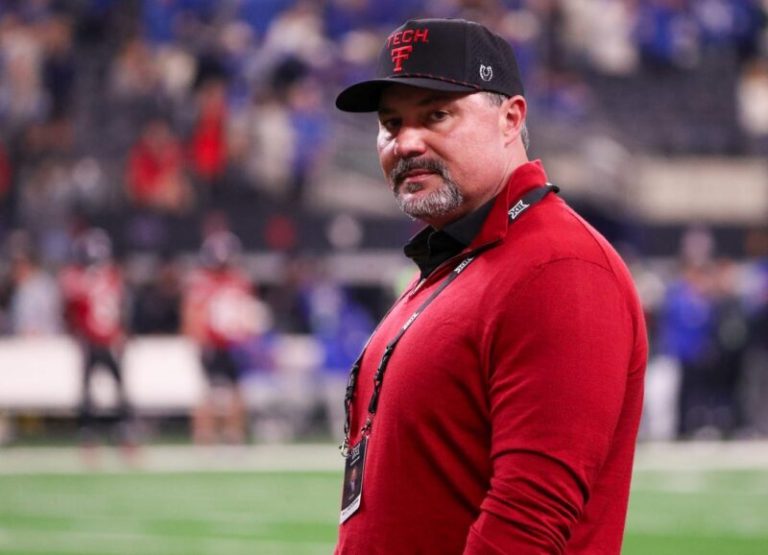
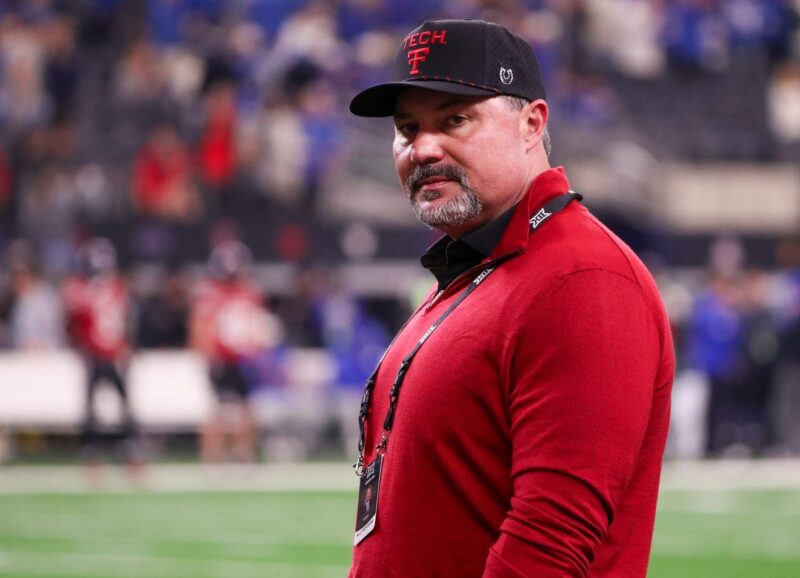
Cody Campbell is Chairman of the Board of the Texas Tech University Board of Regents and Founder of Saving College Sports, a non-profit organization formed to preserve the institution of intercollegiate athletics.

Until recently, the question of who owns intercollegiate athletics has never been a question our country had to ask. Today, however, largely due to a unanimous U.S. Supreme Court Decision, Congress must step in and decide who controls — and who benefits — from the various untethered parts, pieces, and whole of intercollegiate athletics.

Regulatory anarchy, and athletic departments facing financial insolvency, and a flagrant power grab by the most powerful names and entities in college sports have been well documented by alarming headlines. 

College sports are a unique and undeniable cornerstone of American culture. They’ve provided access to higher education for more kids than any program other than the G.I. Bill. This access demonstrably molds today’s athletes into the leaders of tomorrow with 60%+ of American CEOs having a college sports background. The lessons that are forged on the playing field create a stronger country with stronger leaders.

America’s unparalleled leadership development program of collegiate athletics is now in a heap of a mess. 

Let’s look at the history: From the land-grant colleges of the Morrill Act (1862) to the taxpayer-supported stadiums, scholarships, and tax-exempt status, college sports has never been the private fiefdom of any school, conference or cartel. In truth, public money — direct and indirect — has underwritten athletic facilities, coaching salaries, medical care, and the very education that makes them “student” athletes.  Even the most elite private programs ride on the coattails of federal student aid, charitable deductions, public infrastructure and media regulation that make Saturday afternoons possible. College sports are a Public Trust, built by the American people, largely owned by public institutions, and carried on the backs of taxpayers because we collectively believe in the greater good.  College sports certainly don’t exclusively belong to the Power conferences. Despite posturing that implies ownership, these entities don’t own a damn thing.

Each school, conference, media giant and special interest are now in a feeding frenzy to grant a larger piece of the pie — they all want legislation that gives them more money, more TV time and more prominence — almost always at the expense of smaller college athletics programs, programs that provide the same benefits to our country. They realign conferences to stretch illogically across an entire continent, knowing that it will severely injure individual institutions and communities as expenses skyrocket and age-old rivalries die. They negotiate media deals to crowd out small schools and monopolize revenue. They cause non-revenue sports (women’s and Olympic sports) to be cut, fees to be charged to students, and tuition to be raised.  Cutthroat business tactics may make sense in a corporate boardroom, but they are pushing college sports into something more fragile and much less beneficial to our country.

University and conference leaders rightfully explain that they have no choice but to follow the money, purely out of financial self-preservation. But the outcome of those decisions — taken collectively — creates what is approaching a financial monopoly and threatens the vast majority of college athletic departments and athletes.   

The Constitution’s Preamble is not merely ornamental: “We the People … promote the general Welfare” is its sovereign and sacred charge. Government’s solemn duty is not to just stand by and let the strongest programs crush the weaker ones. Its duty is not to allow the rules to be written by institutions and organizations who can afford to hire the most expensive lobbyists. Government’s responsibility is to stabilize the system, de-fang the misplaced sense of ownership and entitlement, and maximize the commercial value of this asset that “We the People” collectively own — so that every school, every sport, every athlete, and every community that has invested its heart and treasure may continue to thrive.

To this end, President Trump’s 2025 Executive Order, the bipartisan legislation recently released by Democratic Senator Cantwell and Republican Senator Schmitt, and the proposals brought forward by the independent organization, Saving College Sports, are aimed at preservation of the entire system and the immeasurable benefits that it provides us all. Recent momentum behind these proposals demonstrates rare bipartisan willingness to work together to save one of the few remaining institutions that unites people of all political persuasions.  

Measures must be taken to make the system permanently financially stable. Many of these measures are included in the above-mentioned legislative proposals and can provide the colleges long-term optionality to collectively pool media rights, and grant freedom to generate revenue through myriad additional avenues that make common business sense.

Bottom line is this: Simply do what is right for the entire country — all schools, all sports, both big and small. This can all be accomplished while honoring existing media contracts, but through ensuring that future arrangements serve the public trust, not just a privileged few. 

It is incumbent on Congress to promote the general welfare, to work for the common good, and preserve college sports for our children and grandchildren. The American people built it. The American people own it. Now, the American people and our elected representatives must protect it.

89354319007-2268129936.jpgwidth1320height882fitcropformatpjpgautowebp

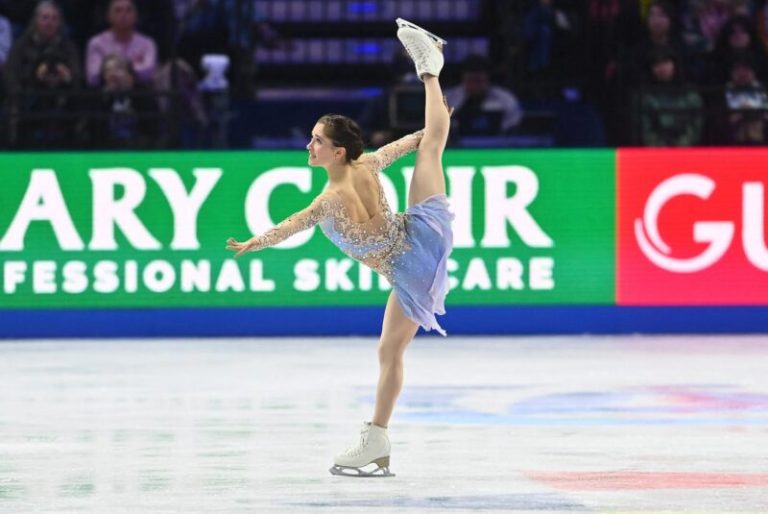
Amber Glenn and Isabeau Levito wanted a shot at a world championship medal after missing out at the 2026 Winter Olympics, but the American stars fell just short.

In podium contention at the 2026 world figure skating championships in Prague, Glenn and Levito had errors in their free skate on Friday, March 27, that proved to be too costly, resulting in a fourth place finish for Levito and sixth for Glenn. Fellow U.S. skater Sarah Everhardt ended in 11th.

Decorated Japan skater Kaori Sakamoto, the silver medalist in Milano Cortina, claimed gold, capping off her stellar career with her fourth first-place finish in the past five years after the three-peat from 2022-24. Fellow Japanese skater Mone Chiba took silver and Nina Pinzarrone of Belgium won bronze.

Both Glenn and Levito did well in their short programs, entering the night in third and fourth place, respectively. While Levito has a previous medal at worlds − a silver in 2024 − Glenn was going for her first one at the event, finishing in fifth last year.

Levito went first and had an under-rotated jump early in her program that resulted in a score of 134.83.

Glenn followed, skating a program that was strong in the Olympics and, if replicated, would have assured her a medal. She started strong with a picture perfect triple Axel.

But then the mistakes happened. The triple salchow was under rotated, and a triple loop, which devastated her short program in Milano Cortina, was decisive again when she was unable to complete the jump. Glenn sat on the ice when she was done skating, clearly upset at the mistakes.

Glenn earned a score of 130.47 for the free skate, keeping her off the podium before Sakamoto and Chiba went on the ice. Levito had a chance to medal if Sakamoto and Chiba struggled, but the Japanese skaters looked exceptional on the ice, leaving no doubt of their victories.

Both American athletes were competing roughly a month after the Olympics ended, coming to Prague after battling illnesses as well. The competition notably didn’t have Olympic champion Alysa Liu, who withdrew from worlds as she has been wrapped up in several career opportunities since becoming the breakout star of the Winter Olympics.

The title is the perfect ending for Sakamoto, with this season being the final one of her career. She hoped to add Olympic gold to her resume in February but took silver. She ends her run with four world titles, a Grand Prix Final champion and as a five-time Japanese champion.

88684186007-usatsi-28239647-168420893-lowres.jpgwidth1320height880fitcropformatpjpgautowebp

  • The NBA is discussing three new concepts to reform the draft lottery and discourage teams from “tanking.”
  • Commissioner Adam Silver has vowed to fix the tanking issue, stating changes will be made before next season.
  • The proposed concepts involve expanding lottery eligibility to include play-in teams and potentially even first-round playoff losers.

At the NBA Board of Governors session earlier this week, the league presented three NBA Draft lottery reform concepts to ownership in an ongoing attempt to combat tanking.

A person with direct knowledge of the matter told USA TODAY Sports that the session was akin to a brainstorm and that the concepts discussed were not considered formal proposals that would be presented to the Board of Governors for voting — at least not yet. Before it gets to that stage, the NBA’s executives want to hear more feedback from team front office personnel prior to elevating any concept as a formal proposal.

The person also said that the concepts could be tweaked further, or that new concepts could be raised in the future. To that effect, the March 25 discussion with NBA ownership was not the first meeting the group has had on these issues. In essence: the league’s efforts against tanking are fluid and evolving.

The person spoke under the condition of anonymity because the person was not authorized to publicly discuss the matter.

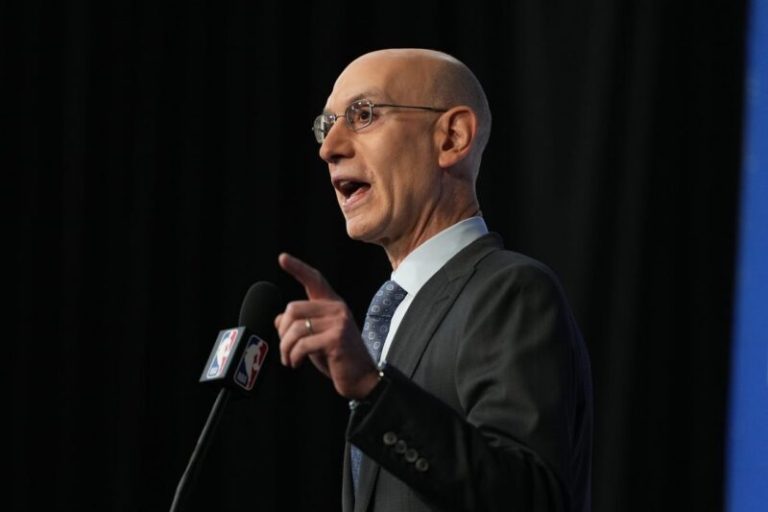
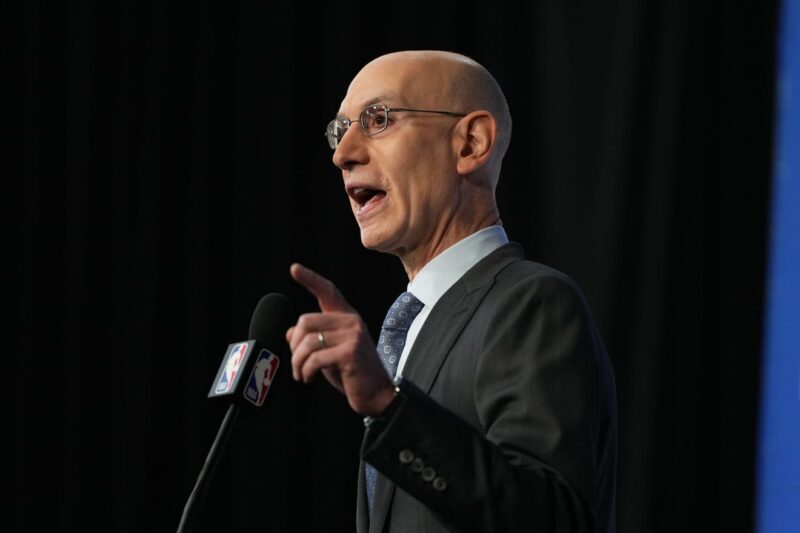
During a March 25 press conference at the end of the Board of Governors meeting, NBA Commissioner Adam Silver characterized discussions with NBA owners about tanking as “lengthy” and vowed that the league is taking the matter seriously.

“We are going to fix it, full stop,” Silver told reporters in the press conference. “I want to say that directly to our fans.”

Given that the 2025-26 NBA season is nearly complete, the NBA does not necessarily need to rush this process, because any potential changes would not impact the bottom of the standings this year. Still, the league is prioritizing the anti-tanking effort and wants to enact changes sooner rather than later.

The NBA will convene a special session of the Board of Governors to vote on any formalized proposals for the 2026-27 season.

“This meeting was not about pointing fingers at any team in particular,” Silver said. “Again, I understand where the incentives are. We understand why it results in certain behavior. I will say it seemed unanimous in the room that we needed to make a change and we needed to make a change for next season. Exactly what that change is, we’re continuing to work on. No votes were taken today.

“I think there’s also unanimous agreement that we need to make this change in advance of the draft and free agency this year so all the teams understand the rules of the road going into next year.”

Here’s a look at the concepts presented:

Concept No. 1: Expand NBA draft lottery eligibility to play-in teams

In this scenario, 18 teams would qualify for the lottery. The 10 teams with the worst records would have the same chance, 8%, to win the lottery. The eight teams that qualify for the Play-In Tournament would then divvy up the remaining 20% of odds, in descending order, from Nos. 11-18.

Concept No. 2: WNBA-style weighted lottery

This concept blends some facets of the way the WNBA operates its lottery. In this scenario, 22 teams would be lottery-eligible. This would include the same 18 teams as the scenario above, while adding the four teams that lose their first-round playoff series.

Then, similar to the way the WNBA ranks teams for its lottery, the NBA would weight teams by their combined records over the most recent two seasons.

Concept No. 3: 18-team lottery most similar to current system

This concept is closest to the way the lottery is set up right now, with some tweaks.

In this version, 18 teams would qualify for the lottery: the teams with the 10 worst records, plus the eight play-in teams. This concept would give the teams with the five worst records — as opposed to the teams with the three worst records in the current setup — the same odds to win the lottery.

Then, odds would go in descending order for the teams ranked sixth through 18th.

Similar to the current lottery system, this concept would have some protections in place to prevent for statistical aberrations: the lowest fall one of the five worst teams could have would be the No. 10 pick.

How does the NBA come up with anti-tanking concepts?

It starts with ongoing discussions and ideas. These can come from team operations or from people within the league office, but the NBA is trying to curate options that appear to have the most traction in a comprehensive list.

The effort to curate and distill these ideas into concepts is being led by NBA executive vice president of basketball strategy and analytics Evan Wasch, NBA president of league operations Byron Spruell and executive vice president, head of basketball operations James Jones. Those three are in constant contact with the NBA’s competition committee so that when the concepts are presented to NBA owners, they’re listed clearly and concisely.

Would any change be permanent?

Almost certainly not. During his press conference, Silver said he believed the league’s previous efforts to combat tanking with lottery reform had worked, but he acknowledged that changes in collective bargaining and changes in analytics and behavior rendered the previous reforms obsolete.

“The world changes, behavior changes,” Silver said. “I don’t necessarily think the changes we made over the last 40 years or so were necessarily wrong. I think in some cases they worked for a period of time. Math is math. When we make those changes and change odds, you know exactly statistically where you’re going to come out.

“What’s changed is behavior around those odds. It may be as the value of franchises has gone up, as the analytics have gotten more sophisticated, as pressure has come from fan bases to engage in behavior that even team ownership or GMs are not proud of, that’s where we find ourselves.”

He also cautioned against the framing of any upcoming lottery reform as a “forever fix” and vowed that the league would continually look at potential changes to the lottery as league economics and league dynamics changed.

“If I’m the one standing at the podium (in five years), I want to make it clear that I recognize things may change also because there also may be changes that we see through collective bargaining or other changes to the system that may impact what we’re doing now,” Silver said. “Certainly going into next season, the incentives will be completely different than they are now.”